
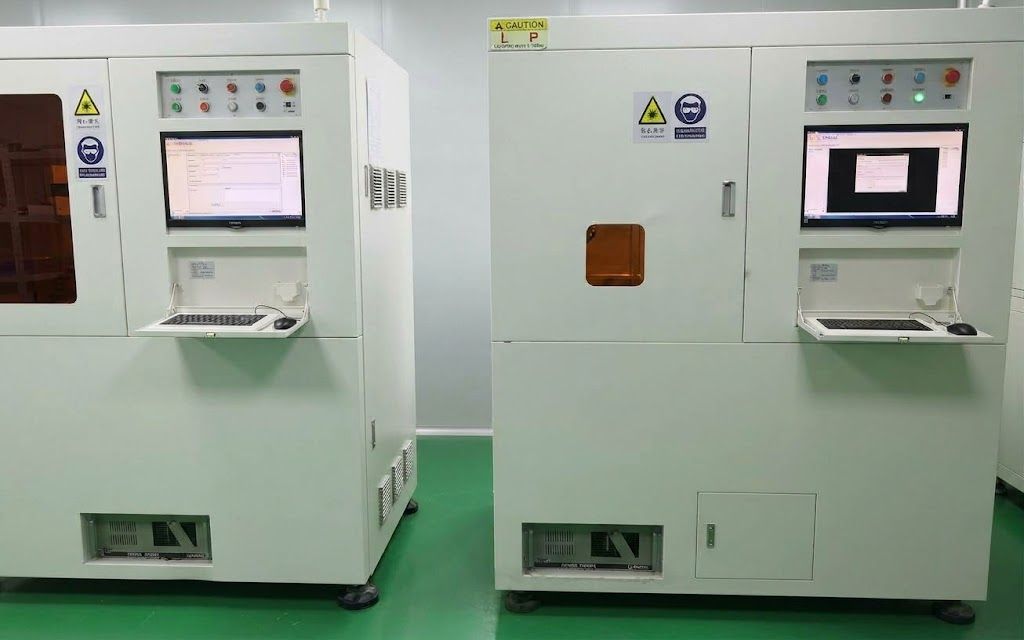
Precision UV Laser Cutting

Cut and trim glass, optical filters and thin patterned components with narrow kerfs, low heat input and repeatable programmed geometry.

Low-stress UV laser cutting for optical components.

UV laser cutting is used when narrow kerfs, repeatable outlines and clean geometry matter. The cutting program can be adapted quickly for new contours, apertures and multi-part layouts while keeping the drawing, process parameters and inspection record connected.

UV laser cutting enclosure used for precision optical component processing

UV laser cutting for patterned glass and thin optical parts

A narrow kerf can reduce material loss and support precise, repeatable contours. The route is useful for custom shapes, internal openings and repeated parts where dimensional control and short changeover time are important.

  • Reference kerf width: ≤0.02 mm
  • Low material waste through narrow cutting geometry
  • Repeatable shapes, patterns and programmed operations
  • Process parameters can be revised for new designs
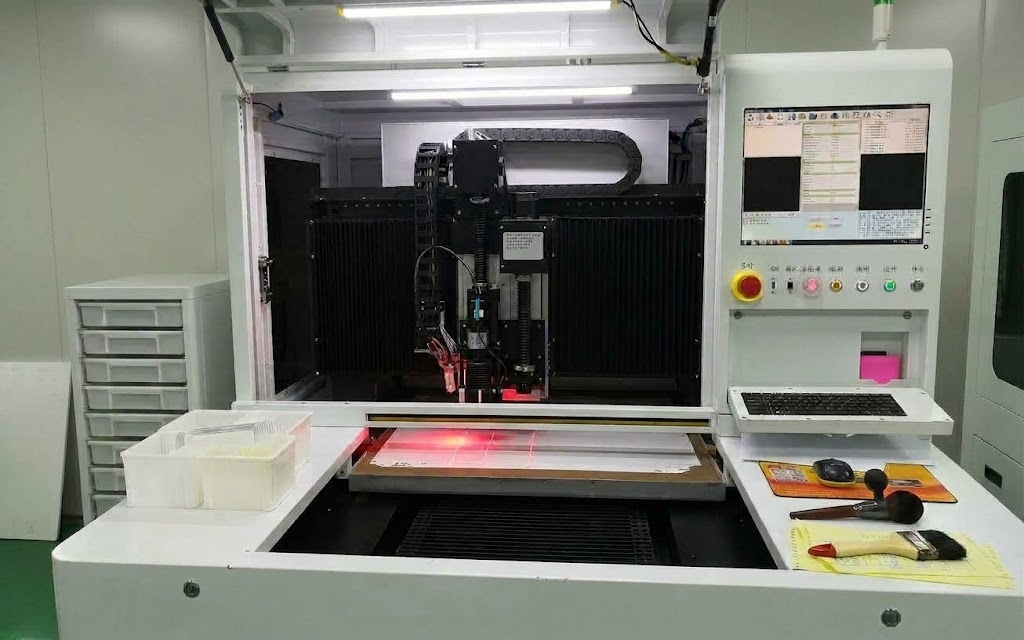
Dedicated UV laser cutting machine with CCD vision positioning for optical filters

Dedicated UV laser cutting for optical filters

A high-performance ultrafast UV laser, CCD vision positioning and visual laser-control software support outline cutting, contour trimming, drilling and composite-film window opening for FPC, PCB and optical filter work.

  • Low mechanical stress and small heat-affected zone
  • Cutting depth and width controlled by process parameters
  • High-precision positioning with CCD vision
  • Parameter monitoring and traceability throughout the process

Planning your project

UV laser cutting shapes outer contours, openings and edges in patterned glass, filters and thin components.

State substrate, thickness, narrowest structure and the relationship between cut features and the active pattern.

Does a correct outline prove that the pattern is aligned to the bore?

Outline dimensions and pattern-to-bore position are separate requirements. Define a common datum and inspect the specified positional relationship.

Search