USAF 1951 Resolution Targets
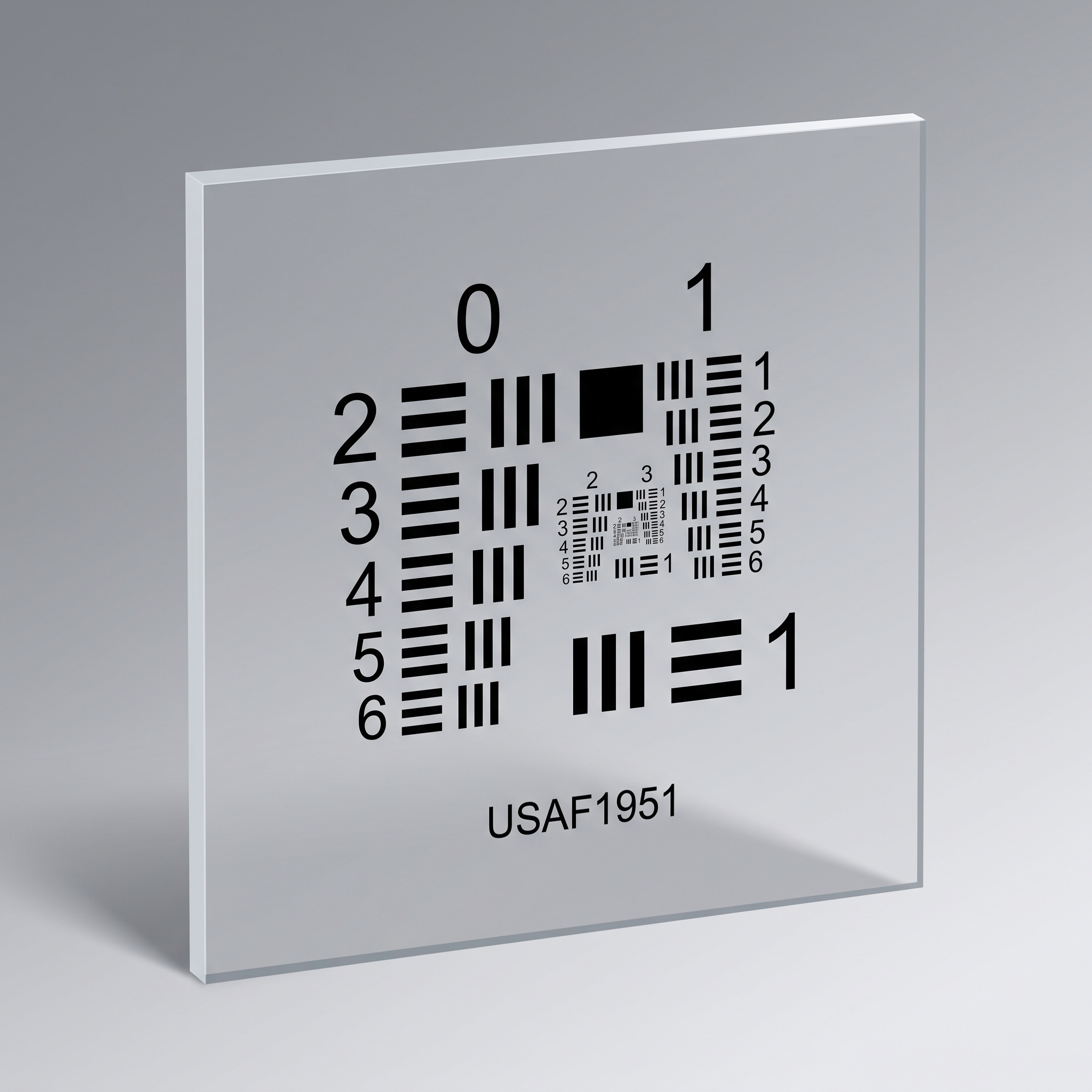

USAF and NBS resolution targets, Siemens stars, checkerboards, dot arrays, concentric squares and multi-feature imaging targets. Choose the pattern family first, then its format and polarity.
Define the optical task first: resolution, geometric calibration or physical scale. Then specify the pattern, substrate and measurement records. A nominal pattern size is not a statement of calibration uncertainty.
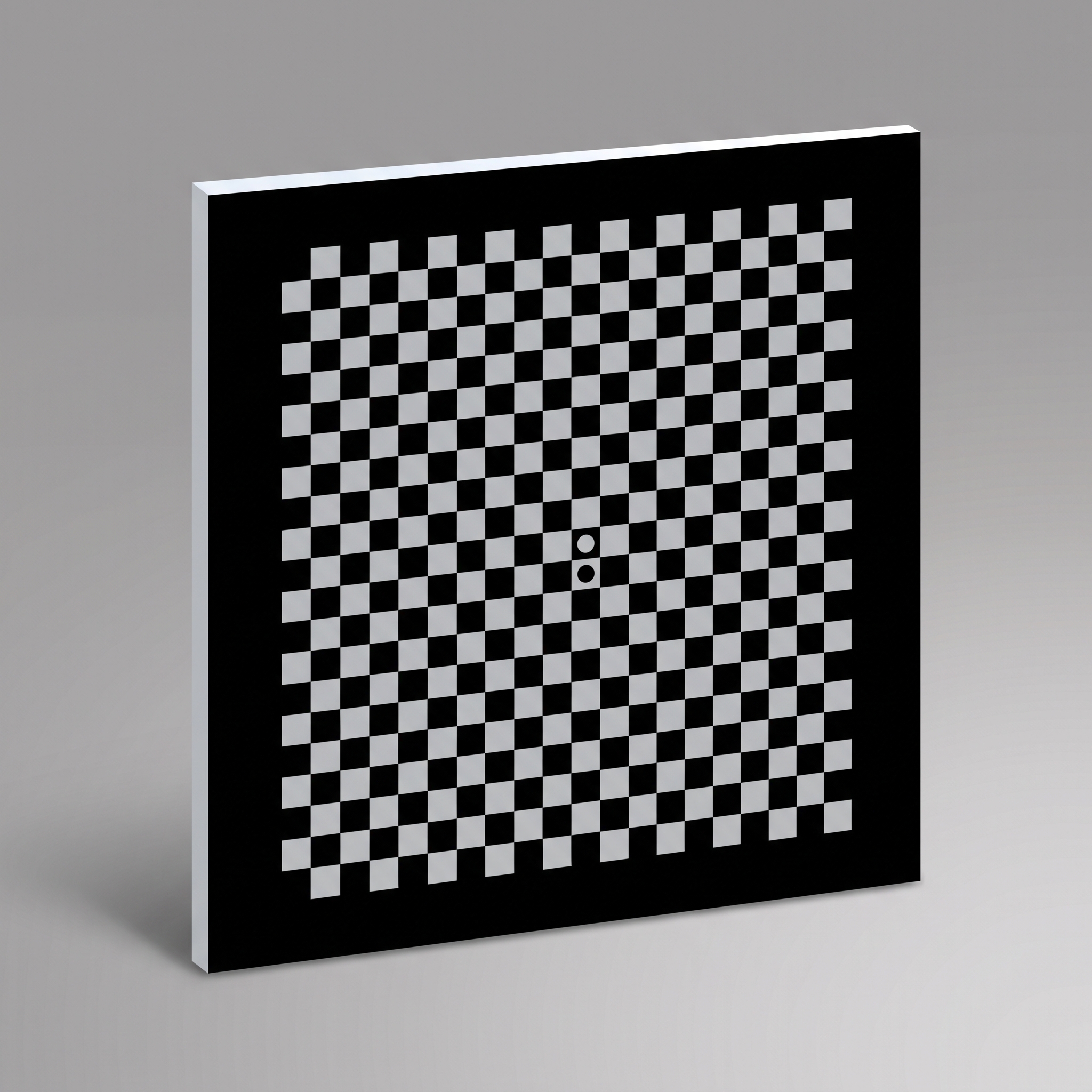
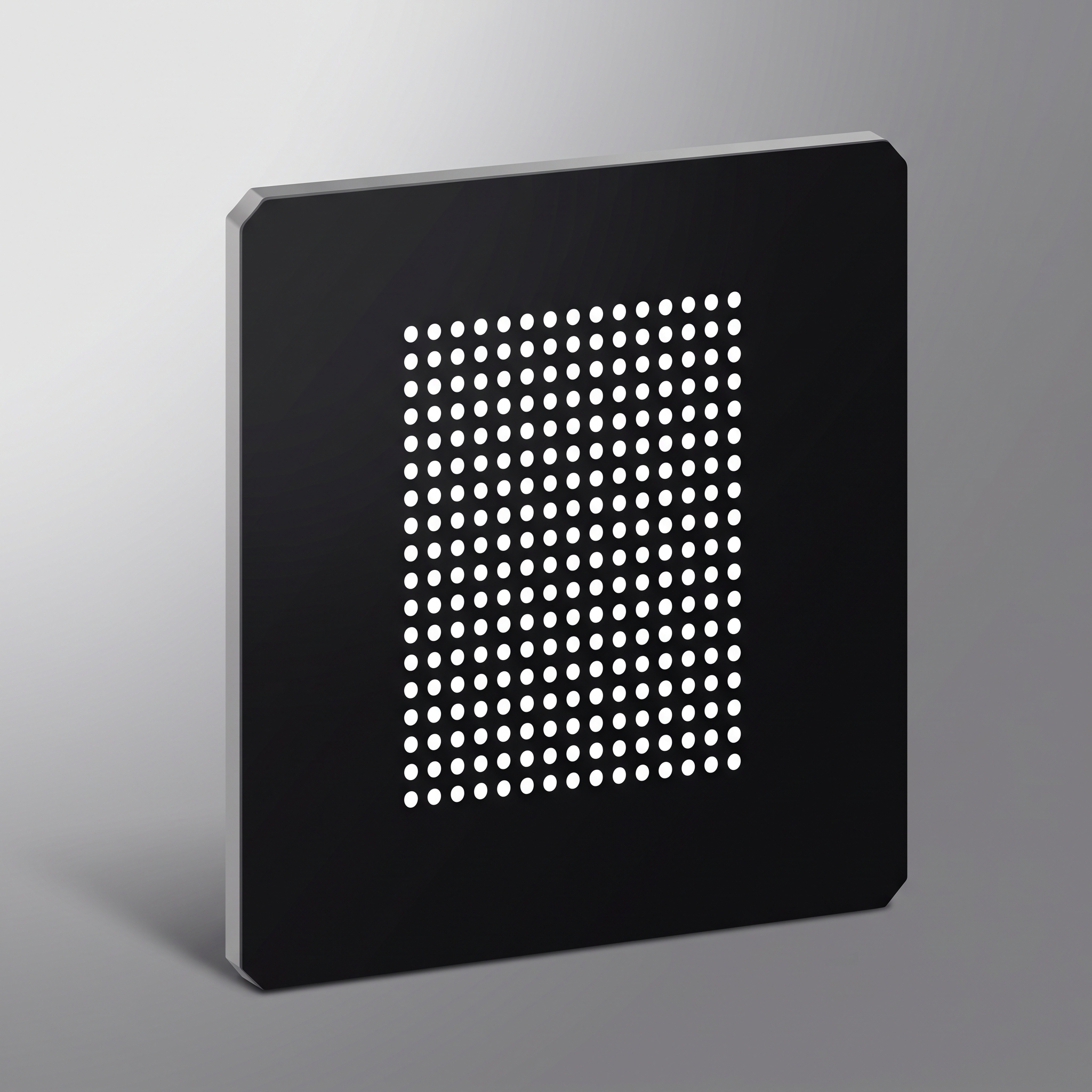
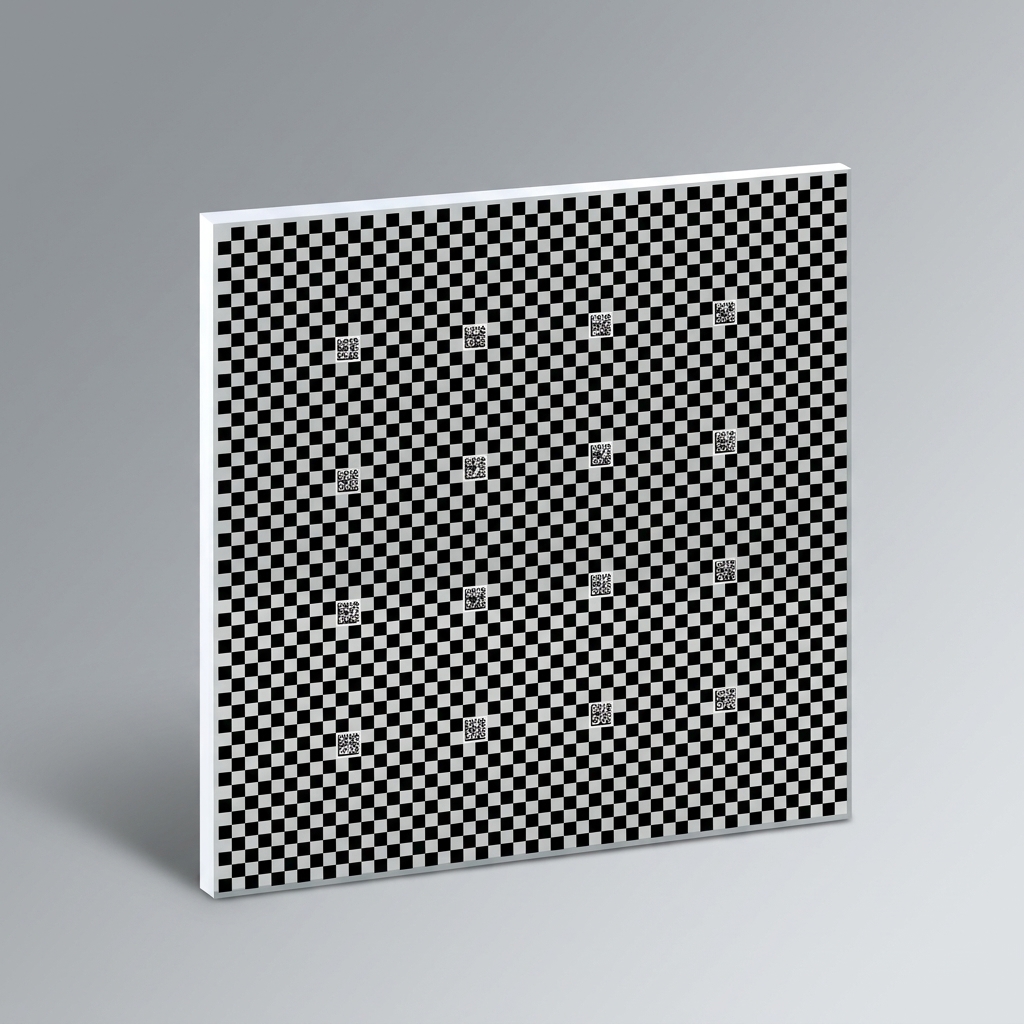
| Task or choice | Product route | Why it matters |
|---|---|---|
| Can the system resolve detail? | USAF / NBS / Siemens star | Compare distinguishable bars or directional detail under consistent imaging conditions. |
| How does contrast vary with frequency? | Slanted-edge SFR / MTF target | Use compatible software; illumination and image processing are part of the measured system response. |
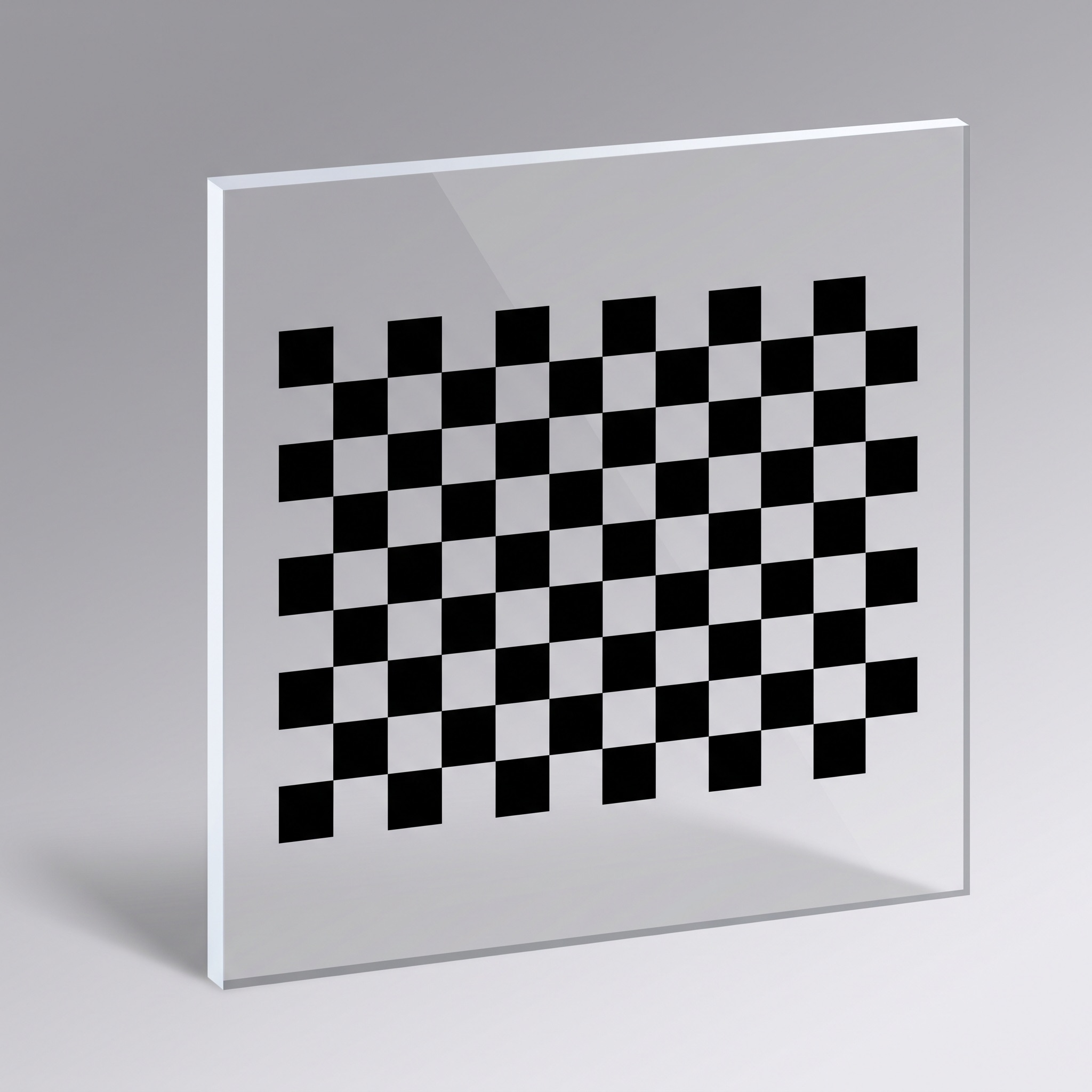
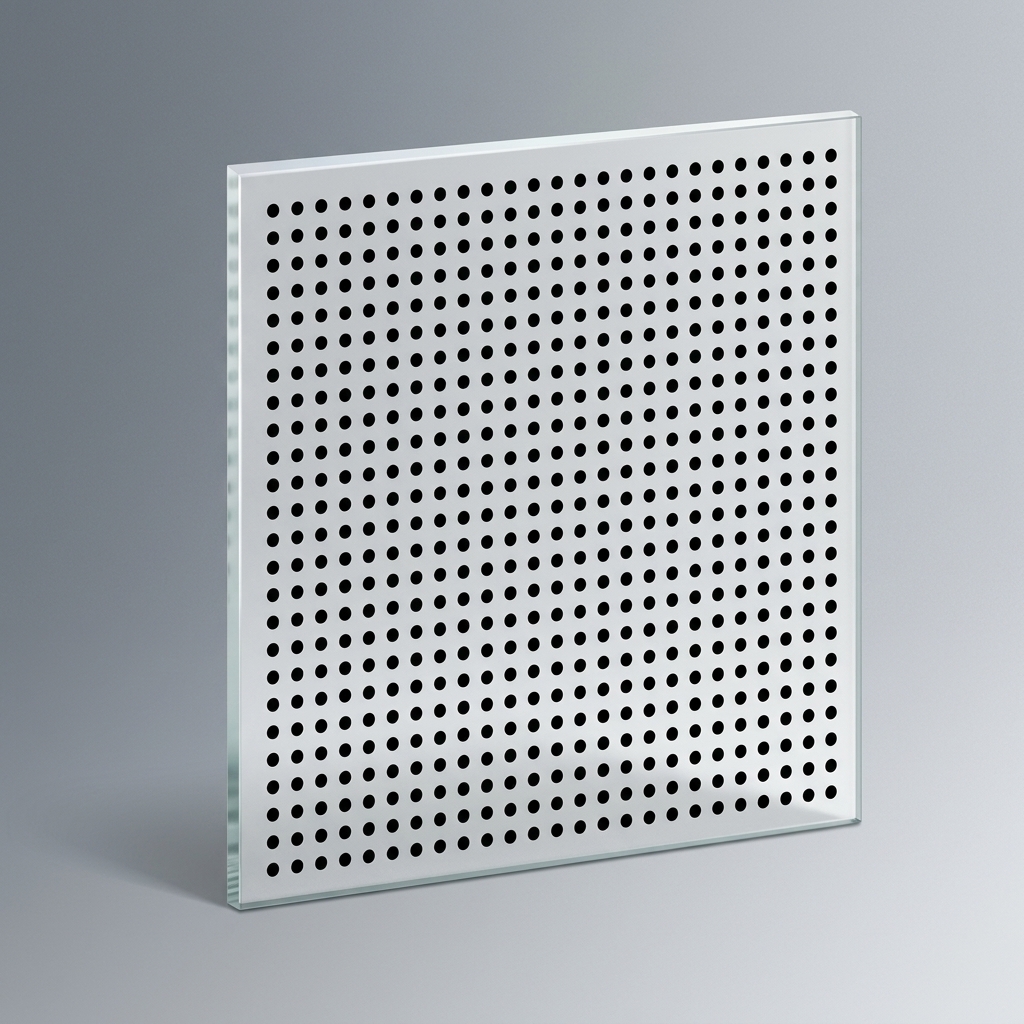
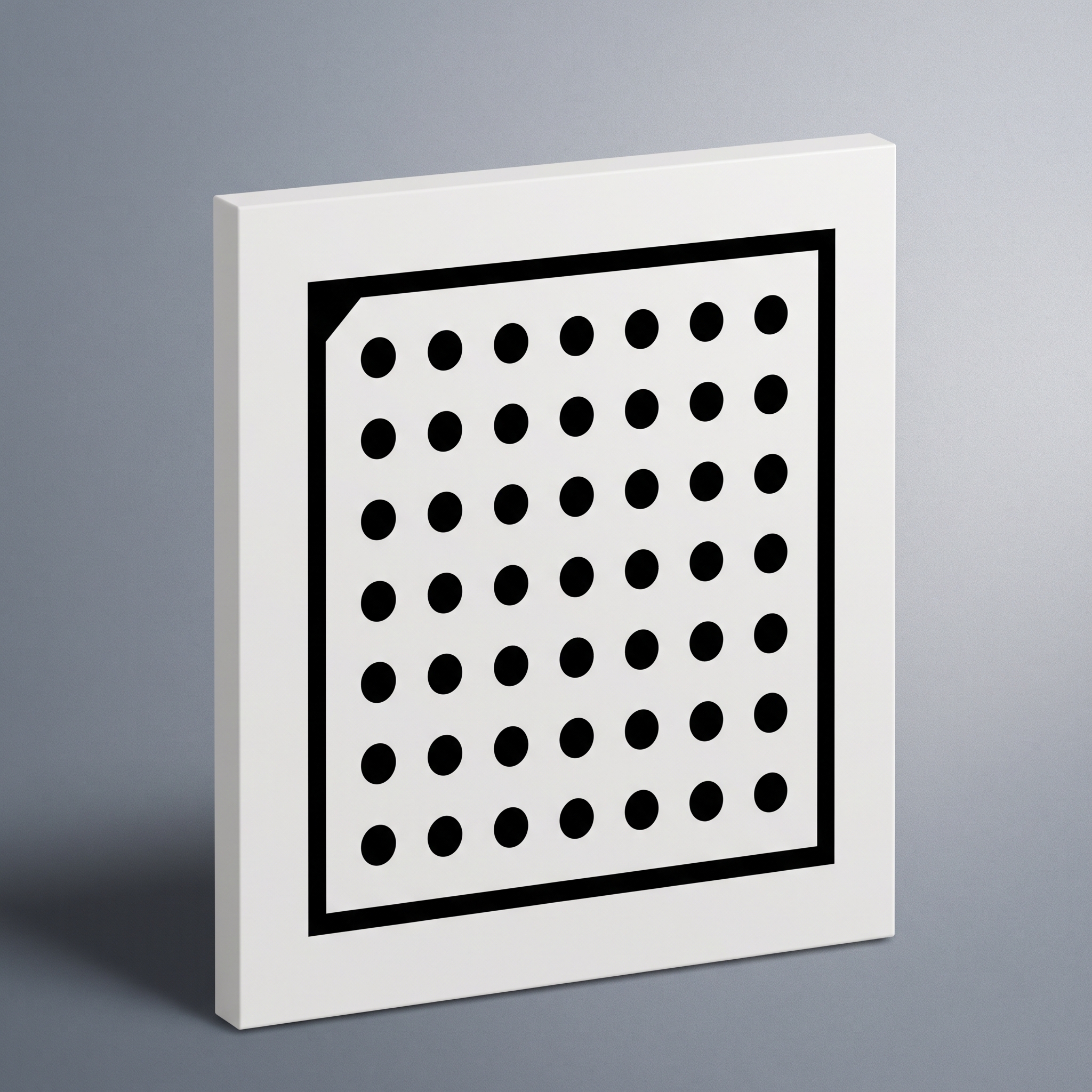
| Are image coordinates geometrically correct? | Checkerboard / dots / grid | Choose the feature layout supported by the calibration algorithm, then collect the required views. |
| How many micrometres per pixel? | Stage micrometer / XY scale | A physical scale at the specimen plane links image units to length for that optical configuration. |
Measurement task
A test target is not a universal “resolution plate”. Its pattern, substrate, illumination and analysis method must match the measurement output: resolved detail, SFR/MTF, geometry, distortion, scale or alignment.
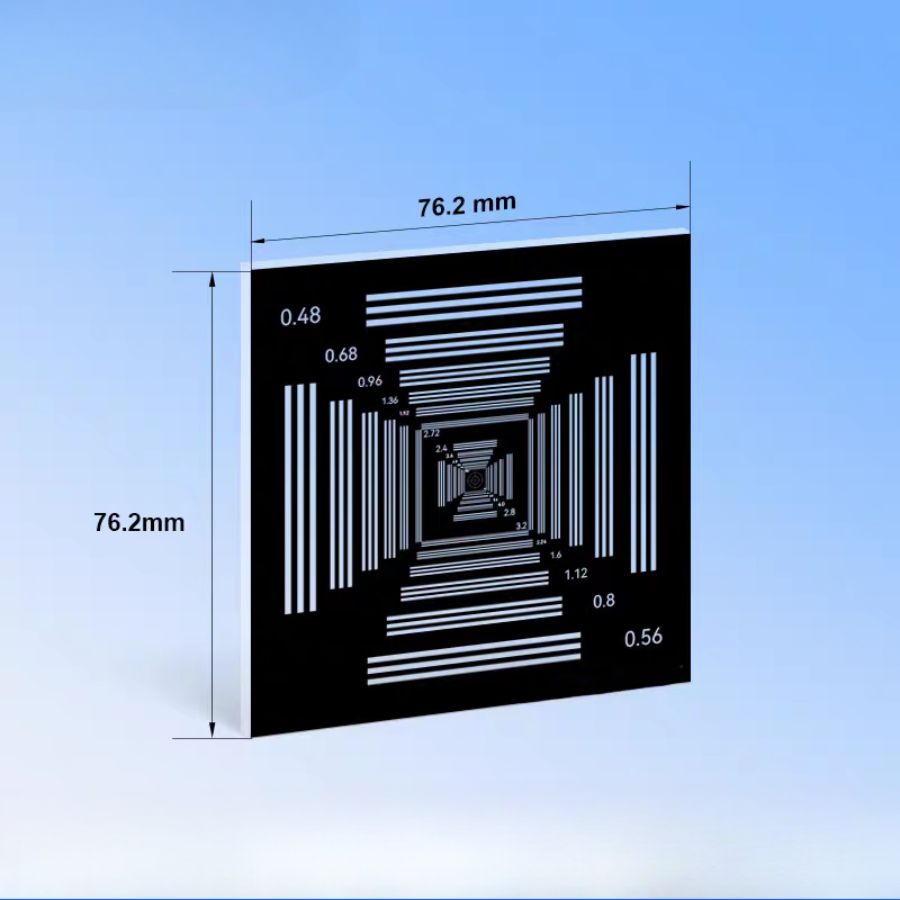
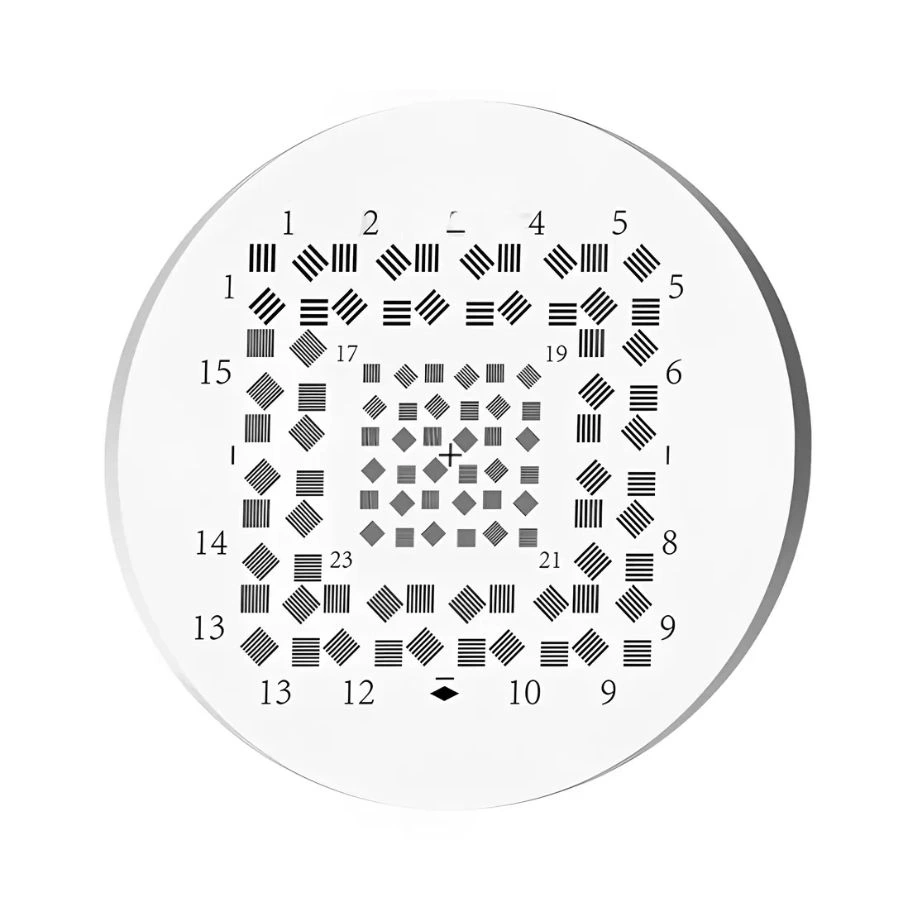
USAF 1951, NBS 1963A and other bar targets compare the finest visibly separated line groups under a defined optical setup.
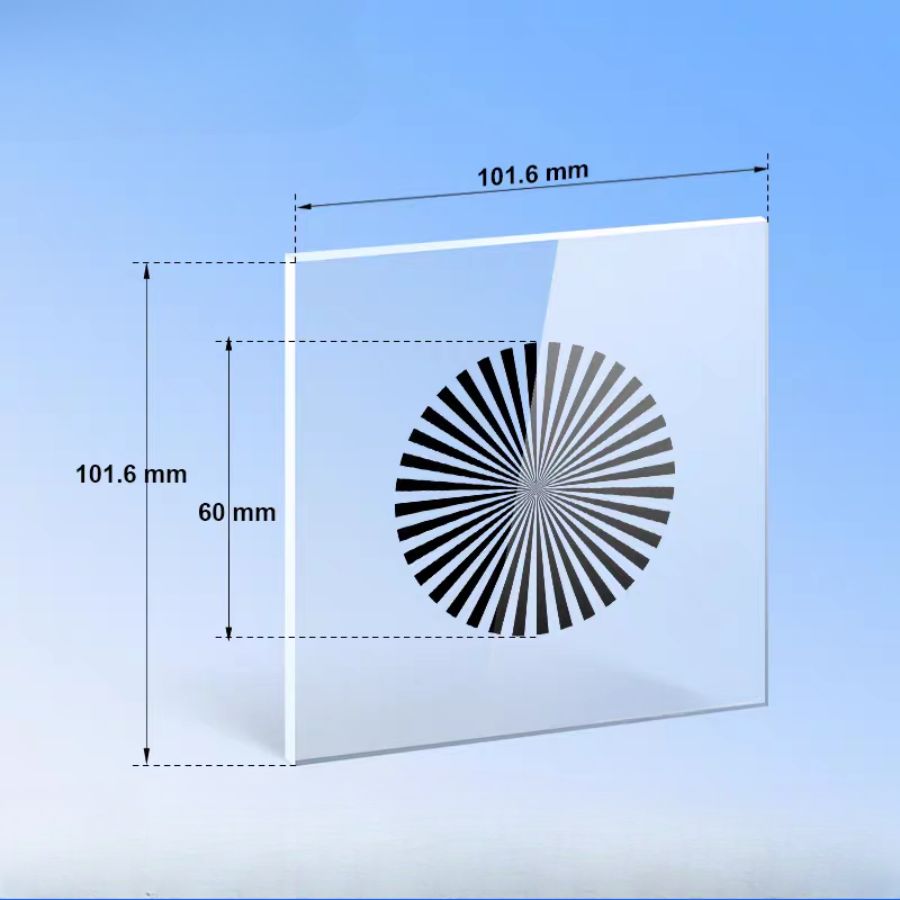
Explore this target familySiemens stars bring many edge directions into one field. Compare focus and directional blur with a defined star geometry, magnification and illumination.
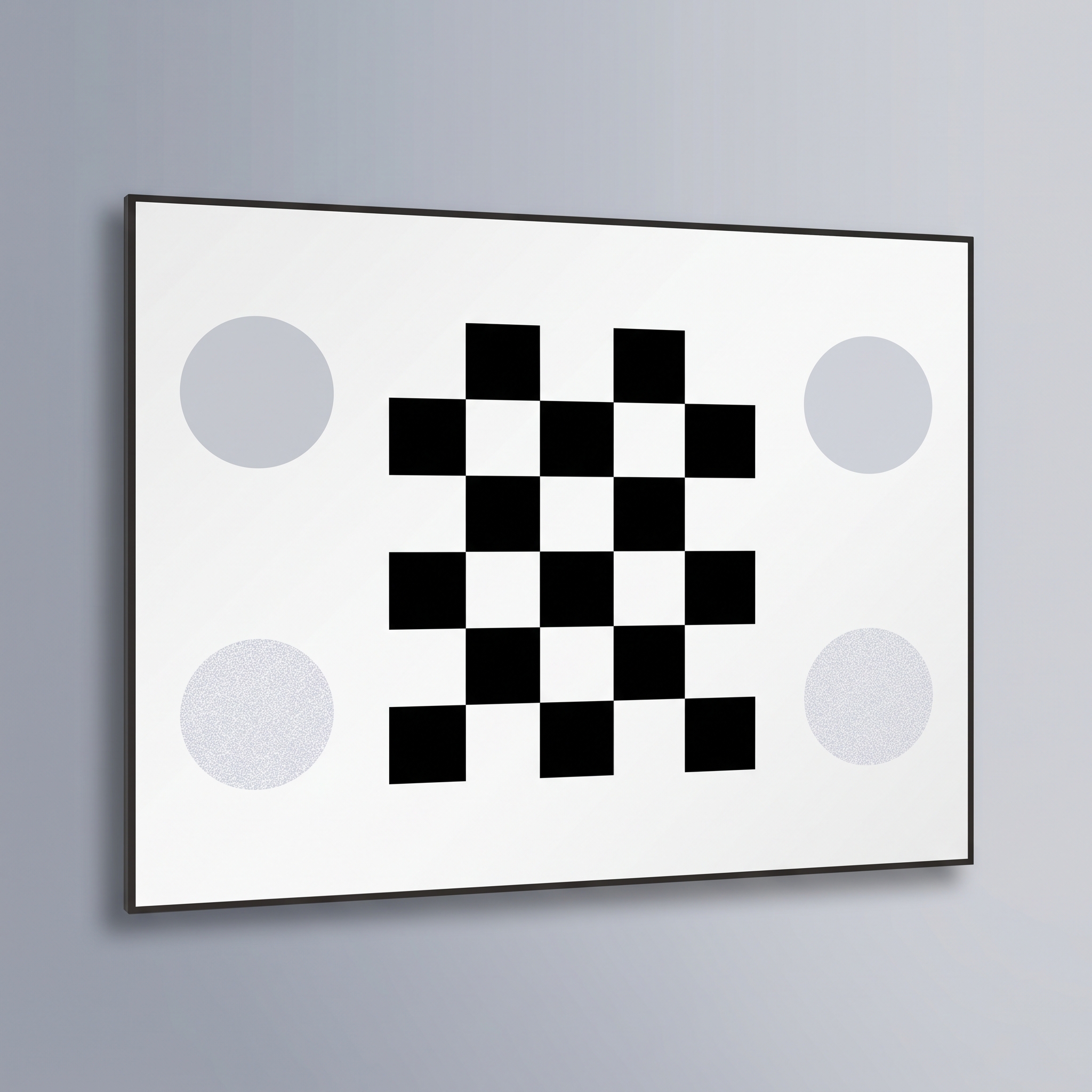
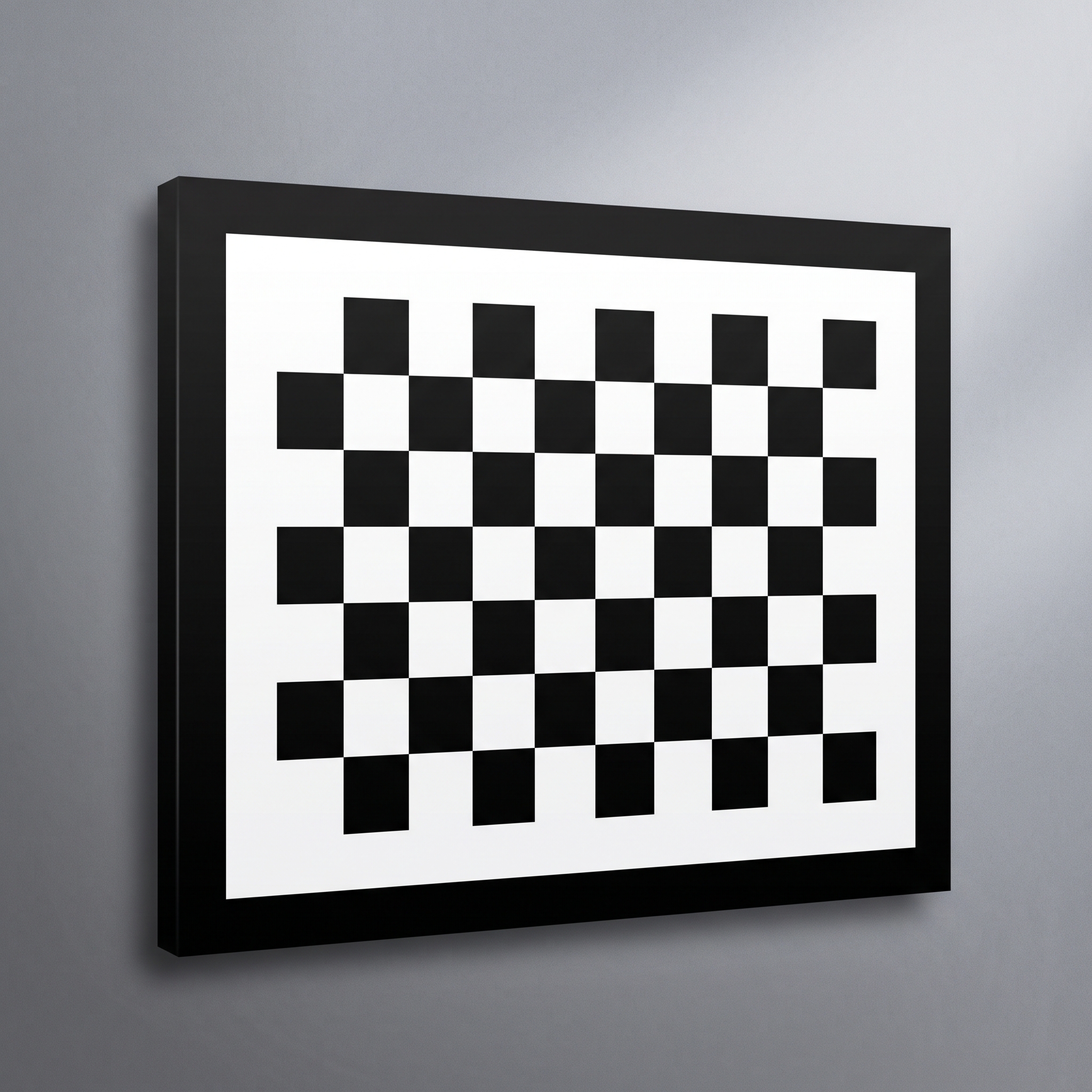
Explore this target familyDot arrays, checkerboards and grids provide known feature coordinates for image scale, lens distortion and pose estimation.
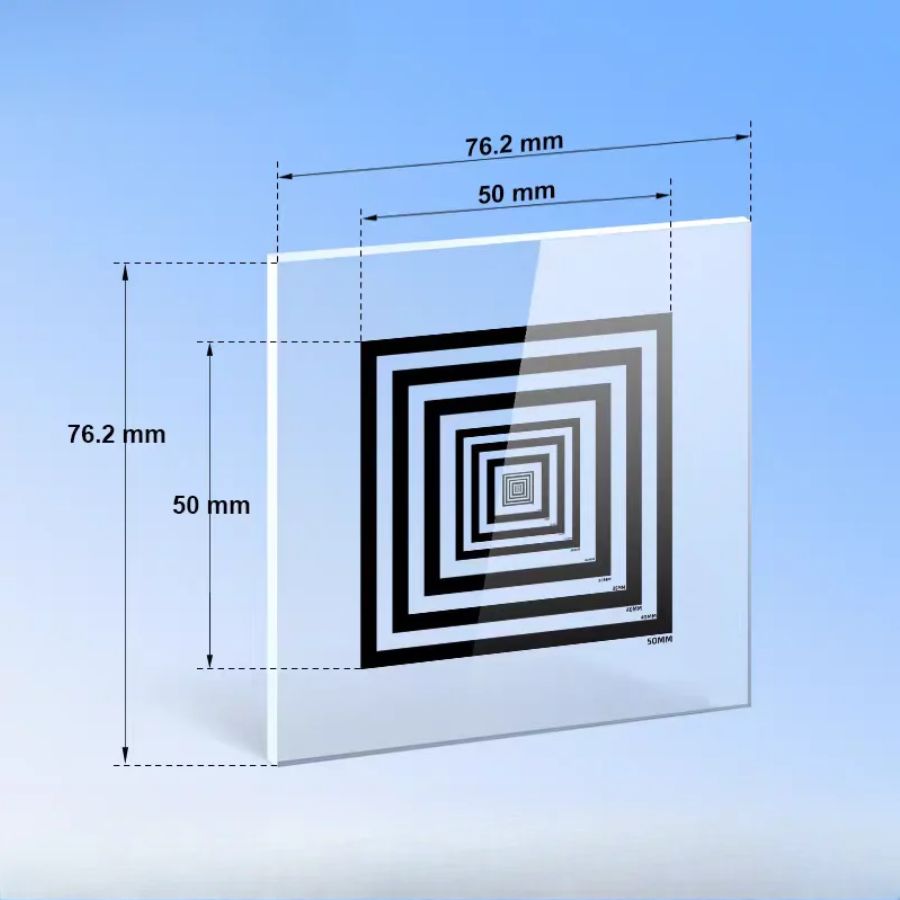
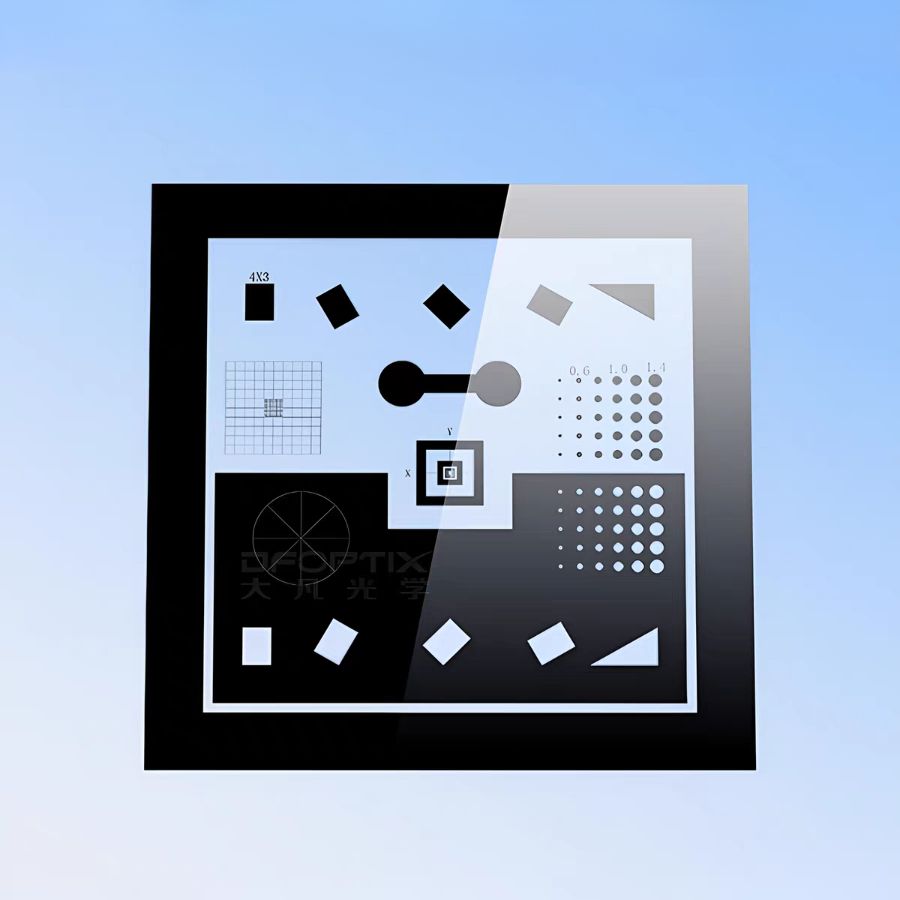
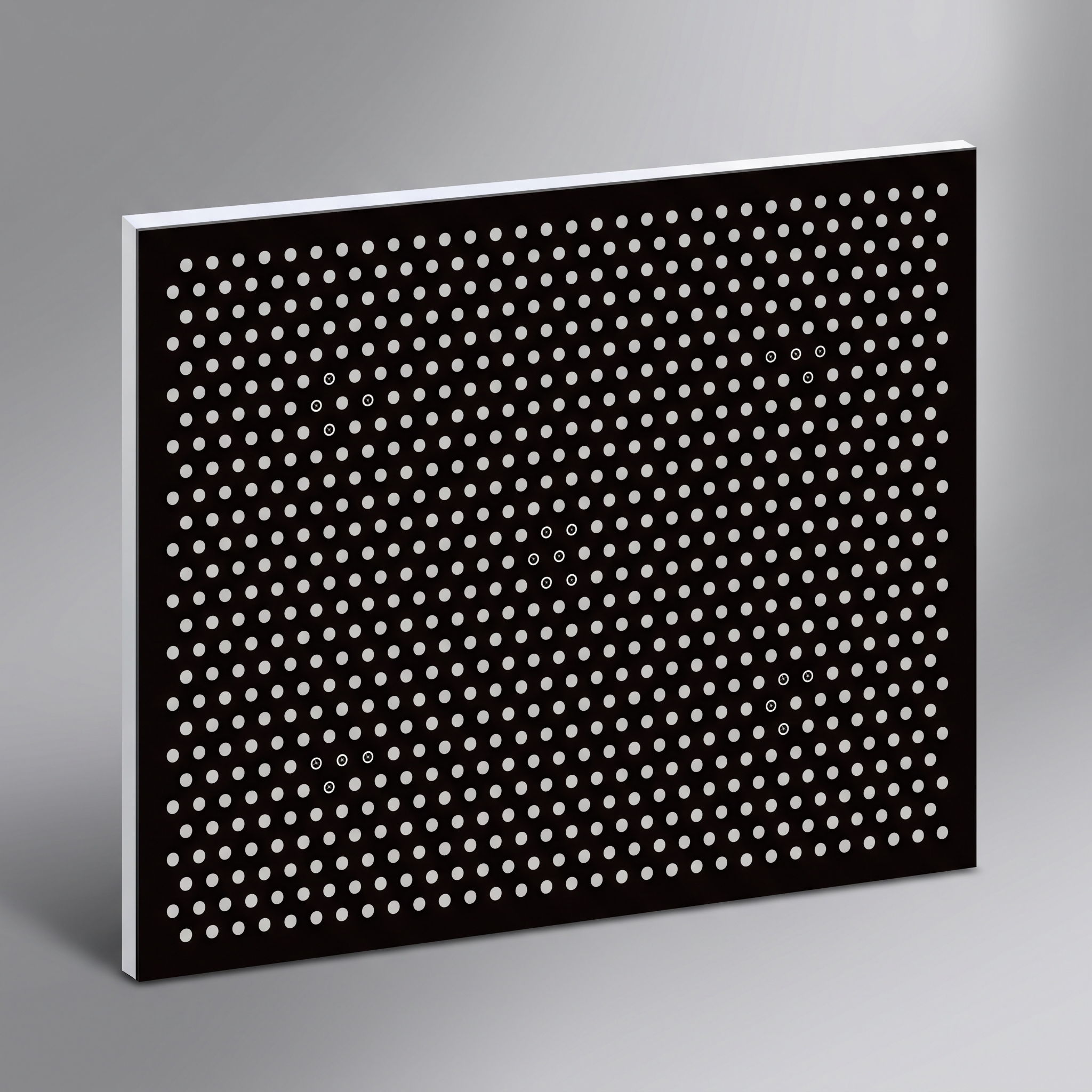
Explore this target familyMulti-feature targets combine selected regions for several checks. Each region needs its own geometry, analysis method and acceptance rule.
Explore this target familyThe same printed pattern can produce different results when magnification, working distance, illumination, focus, sampling or image processing changes. Publish the target geometry and the test method together so another engineer can reproduce the measurement.
TL OPTIK develops patterned targets around what you need to measure. Resolution, SFR/MTF, distortion and dimensional calibration call for different patterns. We help define feature size, active field and substrate around your camera, lens, illumination and analysis method.
Discuss your test targetNo. It is a geometric pattern used under defined conditions to assess resolved detail. A repeatable resolution result still requires a stated setup, focus, illumination, viewing rule and reporting method.
A multi-feature target can combine regions, but each region still has its own geometry and analysis method. Keep the resolution, distortion and coordinate acceptance criteria separate.
The features must be reliably detected by the calibration software, placed at known physical coordinates and supported by a flat, stable substrate. Select pitch, field size and contrast around the camera and lens.
Calibration and test targets provide known geometry or contrast for checking cameras, lenses and measurement systems.