
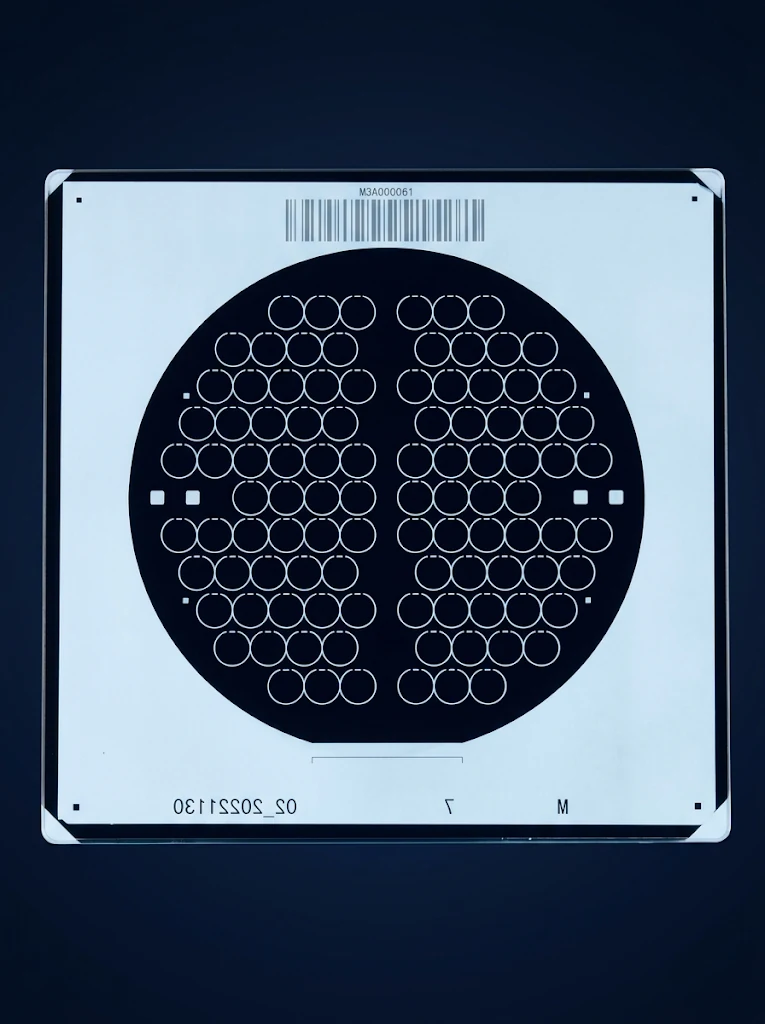
Custom Laser-Patterned Photomasks
Custom chromium patterns on glass and fused silica for contact exposure, proximity lithography and precision pattern transfer.
Mask material and exposure method
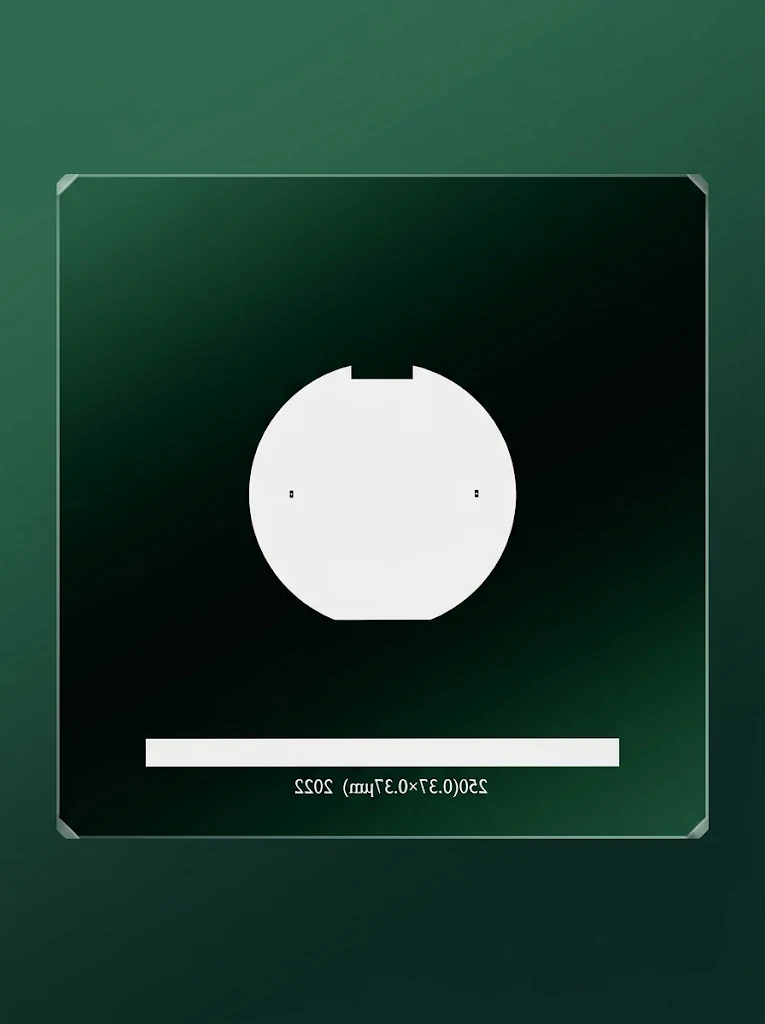
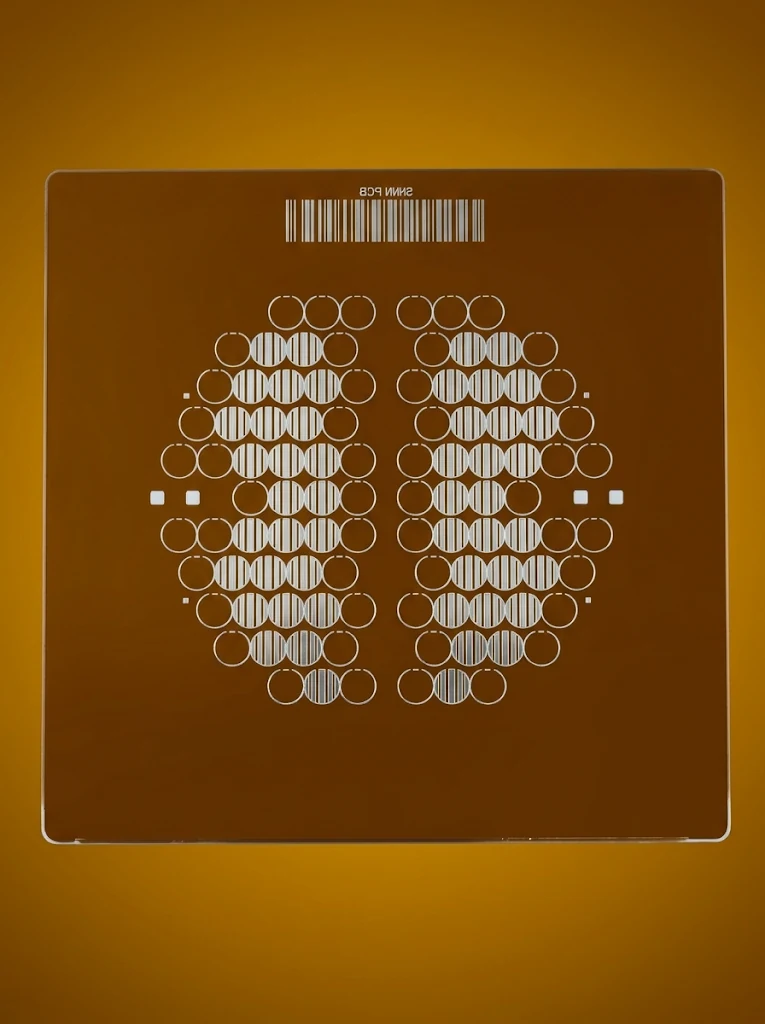
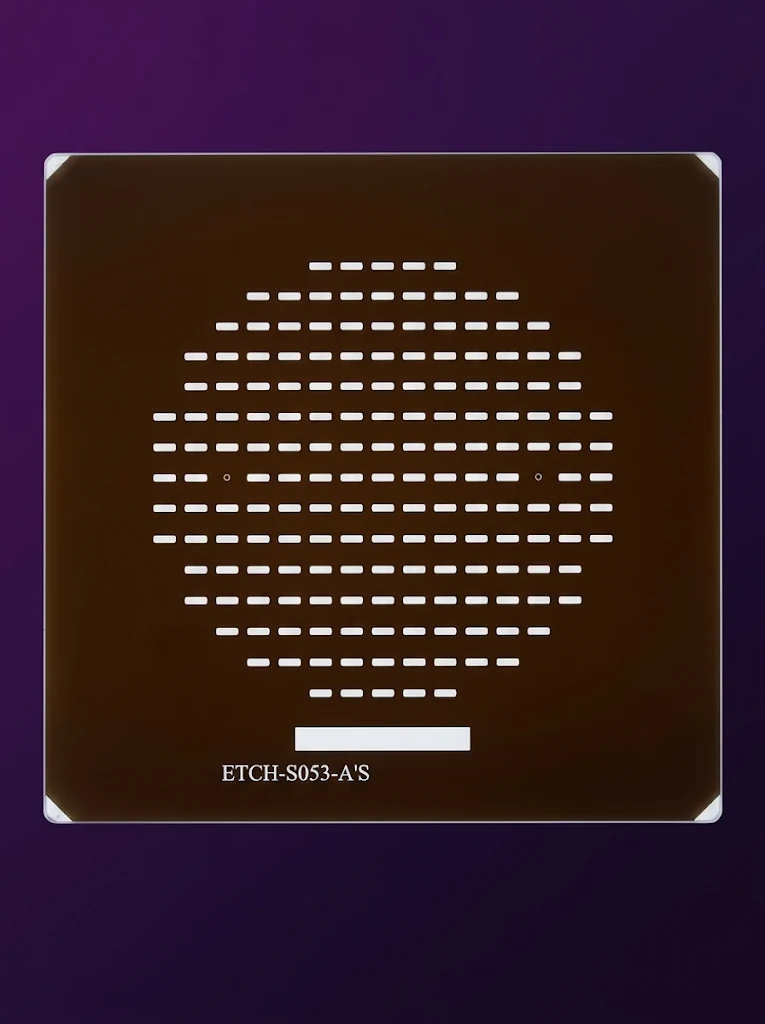
Large fields and aligned layers
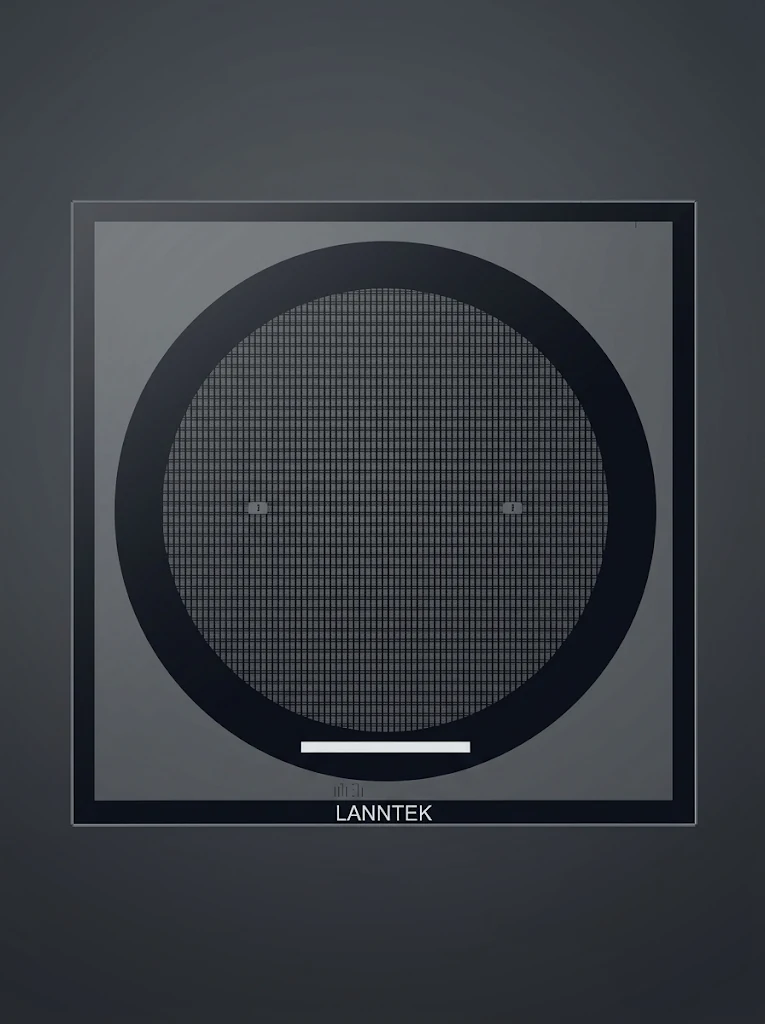
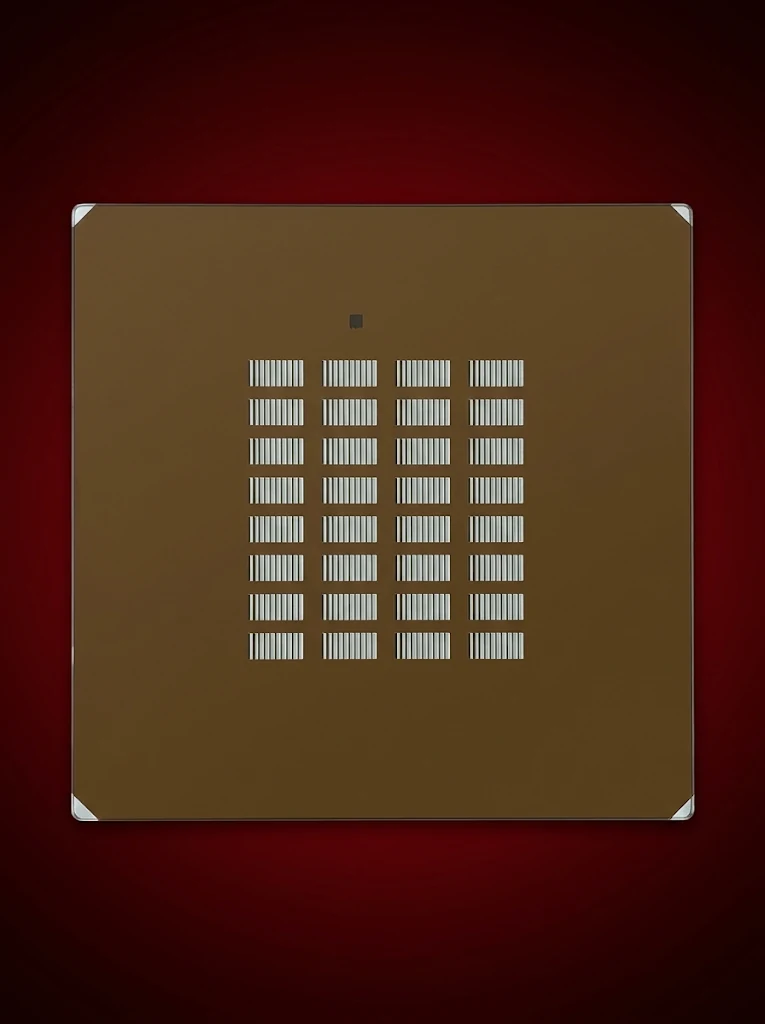
Find the right product for the task
These names describe different choices that can be combined. For example, a fused-silica mask can be used in contact exposure and supplied as one layer of a large-area mask set.
| Task or choice | Product route | Why it matters |
|---|---|---|
| Substrate | Glass / fused silica | Select for wavelength and thermal behaviour. This choice does not determine contact or proximity use. |
| Exposure mode | Contact / proximity | Contact reduces the gap; proximity avoids direct contact but introduces a diffraction trade-off. Match the exposure tool and workpiece. |
| Field coverage | Single field / large area / repeat array | The useful exposure field is separate from the plate outline. Repeated cells can share one coordinate system. |
| Layer relationship | Single mask / coordinated mask set | Successive exposures use separate masks with common alignment marks. A mask set is not a multilayer coating on one plate. |
Bring the selected options into one specification
- Pattern artwork, drawing and revision
- Substrate size, thickness and material
- Minimum feature and critical dimensions
- Pattern orientation and inspection criteria
Your pattern. A photomask made for your process.
TL OPTIK connects pattern data, substrate selection and chrome patterning. For contact or proximity exposure, we review pattern polarity, critical dimensions and alignment marks around your exposure setup. Share your artwork and mask format to discuss a manufacturable specification and an inspection plan.
Discuss your photomaskRelated technical guidance
Selection notes
Photomasks carry transparent and opaque artwork for optical exposure and pattern transfer.