
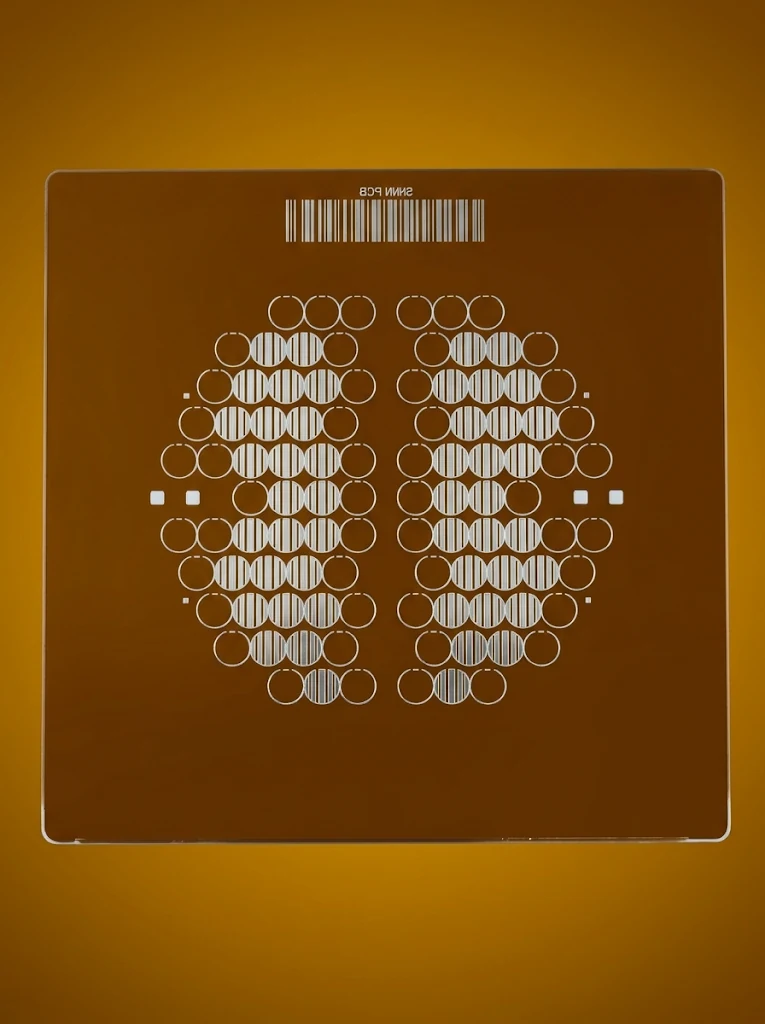
Contact Photomasks

Designed for controlled contact exposure.

Finished photomaskCustom formats

Product selection

What it is and what it does

A contact photomask forms the exposure image with its patterned face against the resist-coated workpiece. Close spacing helps preserve fine detail; particles and surface relief can interrupt contact and affect the printed image.

When to choose it

Suitable when the workpiece is sufficiently flat and the process permits contact with the resist surface. The exposure tool and resist process determine the practical transfer limit.

How it differs from related products

The patterned face is brought into contact with the resist. Compared with proximity exposure, a smaller gap reduces diffraction spreading, but cleanliness and surface topography become especially important because particles or contact can damage the interface.

What can be customised

Substrate, polarity, active field, alignment marks and repeated patterns can be selected independently of contact operation.

What you receive

The product is a patterned glass or fused-silica mask, or an identified set of masks for successive layers. Exposure equipment, photoresist-coated workpieces and the finished devices are separate from the mask itself. Inspection records and packaging form part of the order specification.

Specifications and inspection

Product configuration

Contact Photomasks
Product configurationChrome photomask prepared for contact exposure
Contact surfacePattern side, cleanliness and flatness defined for the fixture
Writing referenceCritical line/space and placement follow the approved artwork
Edge controlUsable field and edge exclusion specified separately
Acceptance focusContact-surface condition, particles, pinholes and pattern orientation

Inspection requirements

Inspect critical features, defects and contact-surface condition; define cleanliness and permissible edge exclusions.

Photomasks for exposure with the patterned surface in contact with the resist-coated workpiece. Surface cleanliness, flatness and pattern orientation are central to the specification.

Built for your process.

Request a Quote
Contact Photomasks

Pattern transfer at the resist surface

Contact exposure places the mask pattern near the resist-coated workpiece with the specified contact arrangement. Reducing the separation can limit gap-related diffraction, while the actual result also depends on illumination, resist and surface condition. This route is used where the workpiece and mask can tolerate the intended contact process.

Clean interfaces support repeat use

Particles at the interface can create local separation, damage or repeated image defects. Handle the pattern side carefully and distinguish surface contamination from defects in the artwork. Mask cleaning and inspection are part of maintaining repeatable transfers.

A clean pattern surface for contact exposure.

Contact masks bring the patterned face close to or against the resist-coated workpiece. Direct writing defines the chrome geometry, while substrate flatness, particles, edge exclusion and pattern-side handling determine whether the mask can make consistent contact.

What this capability enables

  • Controlled critical features for contact transfer
  • Pattern-side orientation and edge exclusion defined for the fixture
  • Cleanliness and contact-surface inspection included in the acceptance plan

Substrate & optical configuration

Choose glass or synthetic fused silica around the exposure wavelength, thermal requirements and fixture. State chromium optical density, reflectance, film-side orientation and allowed defect classes. The clear and opaque regions must be unambiguous in the approved artwork.

Quality & Inspection Photolithography

Where this product is used

Common questions

Can the same artwork be viewed from either side?

Looking through the glass reverses the view relative to the chrome side. Mark the viewing side and readable text direction on the drawing.

Selection notes

Contact photomasks transfer a pattern with the patterned face in contact with the resist-coated workpiece.

Define contact area, film-side orientation, cleanliness, flatness and workpiece condition alongside the exposure process.

Information for your inquiry

Polarity, contact face, wavelength, workpiece dimensions, exposure area and clamping arrangement.

How do contact and proximity masks differ?

Contact exposure places the mask against the coated workpiece. Proximity exposure keeps a specified gap. Select the mode and its exposure conditions for the equipment and workpiece.

Search