
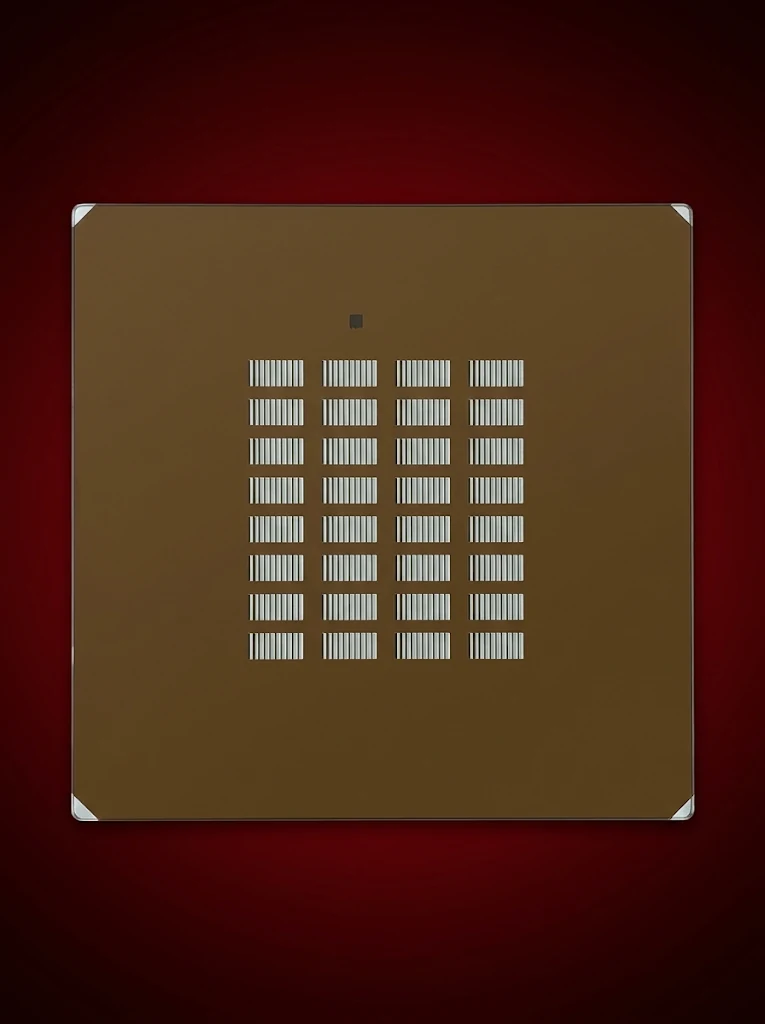
Multi-Layer Photomask Sets

Built for aligned mask sets.

Finished photomaskCustom formats

Product selection

What it is and what it does

A multilayer mask set provides a separate optical pattern for each lithography step. Shared alignment features connect openings, conductors and other successive structures to a common coordinate system.

When to choose it

Use a set when later exposures must register to earlier structures, such as electrode, opening and alignment layers in a microfabrication process.

How it differs from related products

A mask set contains separate patterns for successive process steps, not several coating layers on one plate. Alignment marks connect the masks to the same workpiece coordinate system; overlay also depends on the exposure tool and substrate behaviour.

What can be customised

Layer order, shared datums, overlay marks, per-layer polarity, repeated fields and readable layer/revision identification can be coordinated.

What you receive

The product is a patterned glass or fused-silica mask, or an identified set of masks for successive layers. Exposure equipment, photoresist-coated workpieces and the finished devices are separate from the mask itself. Inspection records and packaging form part of the order specification.

Specifications and inspection

Product configuration

Multi-Layer Photomask Sets
Product configurationCoordinated mask set with shared alignment datums
Layer controlLayer identity, polarity and artwork revision per mask
Alignment reference225 nm or 350 nm 2nd-layer alignment reference by configuration
Data packageShared origin, global/local marks and coordinate transforms
Acceptance focusInter-mask registration and revision traceability

Inspection requirements

Inspect layer identity, feature dimensions and registration against shared datums; retain the approved artwork revision for each mask.

Coordinated sets of glass photomasks with shared alignment marks, layer identification and artwork revision control for sequential exposures.

Built for your process.

Request a Quote
Multi-Layer Photomask Sets

Related patterns for successive process steps

A mask set contains different patterns intended to build related layers. Shared datums and alignment marks help each exposure locate features relative to earlier layers. This is useful in compatible sensor, microelectronic and microfluidic fabrication routes requiring more than one patterning step.

Revision control preserves the layer relationship

Treat the layers as a coordinated design: identify reading side, polarity, process order and common reference coordinates. A correct individual mask can still belong to the wrong revision of a set. Keeping the full layer map together reduces mismatched exposures.

Aligned mask sets built from one coordinate system.

A multi-layer set is prepared as a coordinated data package. Shared origins, global and local alignment marks, layer polarity and revision control are checked before writing so each mask can be inspected against the same reference.

What this capability enables

  • Layer-to-layer registration planned around the selected writing configuration
  • Shared alignment marks and layer identification carried through production
  • Artwork revisions and inspection records retained for every mask in the set

Substrate & optical configuration

Choose glass or synthetic fused silica around the exposure wavelength, thermal requirements and fixture. State chromium optical density, reflectance, film-side orientation and allowed defect classes. The clear and opaque regions must be unambiguous in the approved artwork.

Quality & Inspection Photolithography

Where this product is used

Common questions

Does mask registration equal final device overlay?

No. Final overlay also depends on exposure alignment, substrate deformation and process conditions. State both requirements separately.

Selection notes

Multi-layer photomask sets place the patterns for successive processing steps on a coordinated set of masks.

Define layer identifiers, revisions, shared coordinates and alignment marks. Manage inter-layer registration separately from local line width.

Information for your inquiry

Layer artwork, process order, origin, alignment marks, polarity, revisions and layer-specific requirements.

Can each layer be treated as an unrelated drawing?

The layers combine on the same workpiece and need shared datums and compatible revisions. Checking each pattern independently does not establish registration between layers.

Search