What the component does
A large-area mask carries many repeated features within one controlled coordinate system. Layer sets keep the associated patterns and alignment marks together.

Maintain pattern placement across a large substrate while registering repeated display features from layer to layer.
The sketch illustrates one exposure relationship. The actual mask format follows the selected contact, proximity or projection equipment.
The enlarged array represents repeated geometry, not a particular display circuit design.
A large-area mask carries many repeated features within one controlled coordinate system. Layer sets keep the associated patterns and alignment marks together.
Substrate flatness, support and temperature influence the relationship between distant features. Alignment should be evaluated across the useful exposure area.
A small scale mismatch can accumulate over a large field. Checking only the centre may miss edge placement errors or local distortion.

Finished masks covering an extended exposure field.
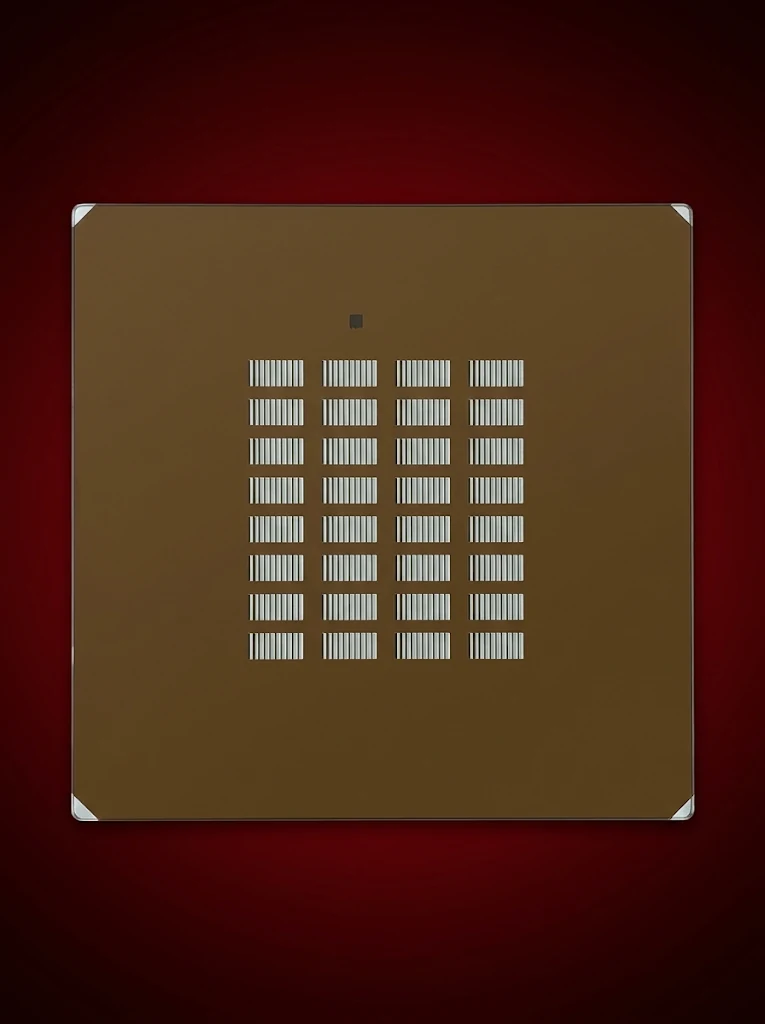
Related mask layers with consistent alignment features.

Custom plate formats and substrate/coating configurations.
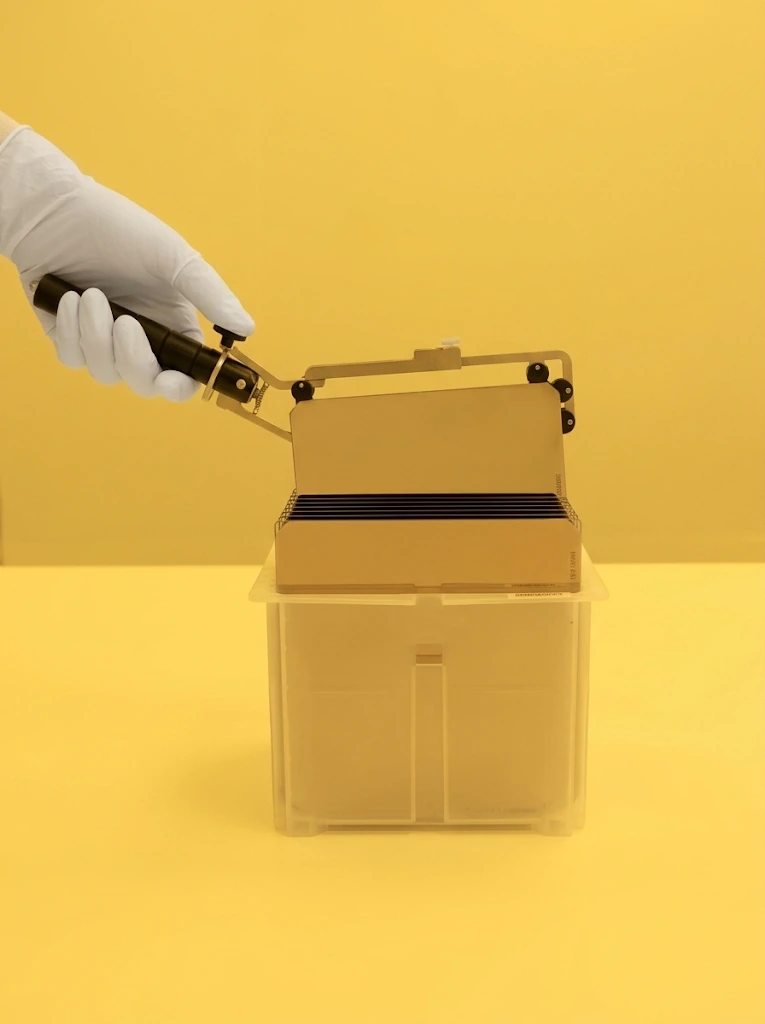
Resist-coated blanks for the display-mask fabrication step.

Chrome-coated starting material when resist coating follows separately.
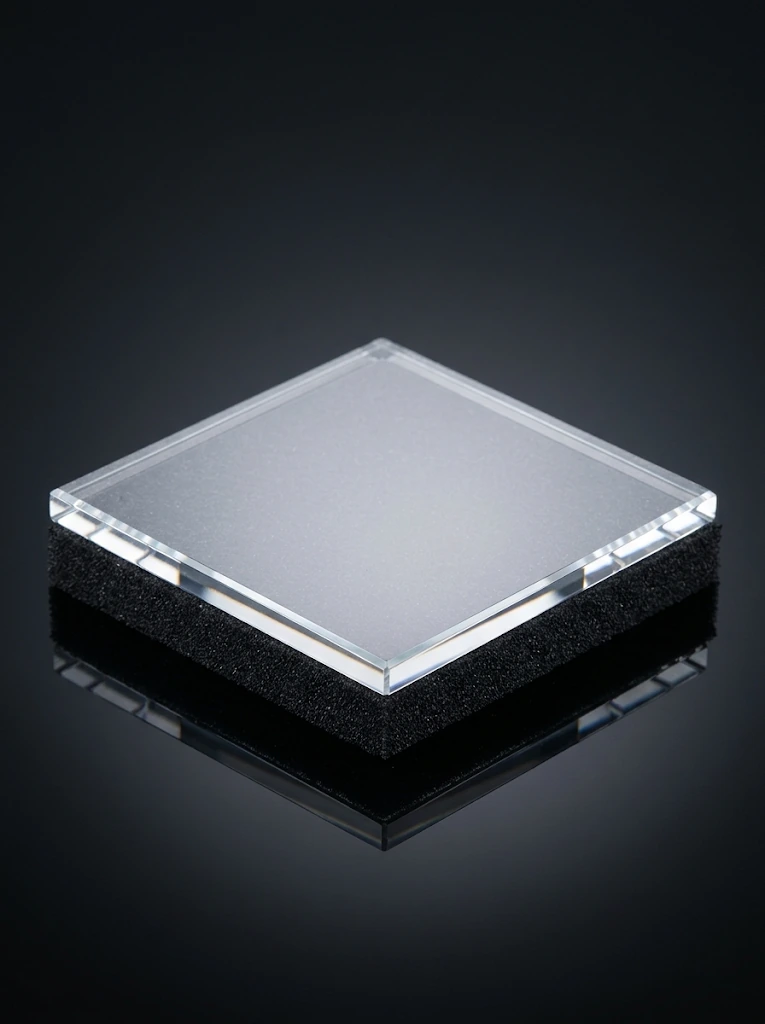
Polished substrate formats with specified flatness and surface quality.
Display manufacturing uses repeated patterns and aligned layers across an exposure field. A photomask carries the electrode, pixel or other functional geometry required by the process. Suppliers making their own masks may start from a coated blank; production exposure uses a finished patterned mask.
Large fields make substrate flatness, pattern placement and thermal dimensional change central to the specification. Define the active field separately from the plate outline and clamping zone. Legacy STN/CSTN and PDP projects should use their actual artwork and process requirements.
Display-related pattern transfer can require extended fields and repeated alignment features. The usable image area, substrate flatness and registration between layers matter independently. A large plate by itself does not establish the resolution or overlay of a complete display process.
Display photomasks carry electrode, pixel or other functional patterns and alignment references over an exposure field.
Choose blanks for in-house mask fabrication and finished patterned masks for the corresponding production exposure.
The exposure layout, handling edges and alignment marks also determine the mask outline. Panel dimensions do not replace the mask and fixture specification.