Infinity-conjugate lens checks
Place the chart in the collimator focal plane to present its pattern as a distant object to the tested optics.

NBS 1963A five-bar resolution targets for ISO 3334-style readings, microscope and scanner testing, and infinity-conjugate collimator setups.
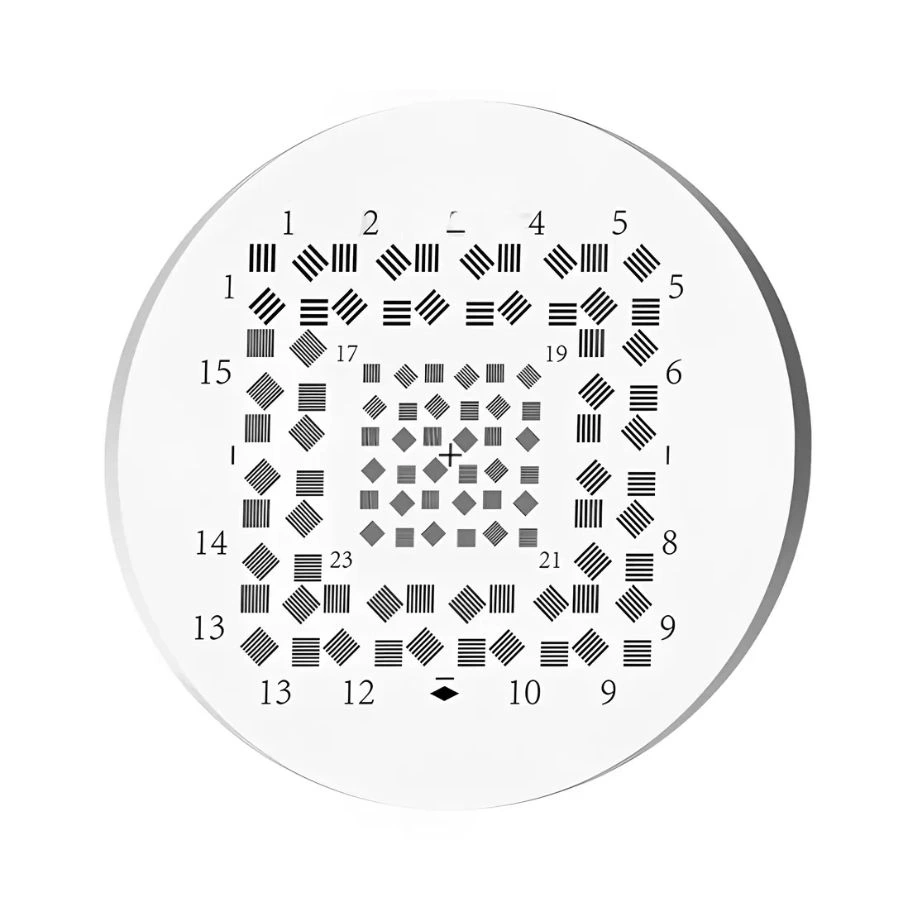
NBS 1963A uses five long parallel bars in horizontal and vertical groups. The approved artwork uses a long-bar ratio of about 24:1 and discrete labelled fields. In a collimator setup the target is placed at the focal plane, so the physical cycles/mm value must be converted into an angular result using the collimator focal length.
Choose it when the procedure calls for an ISO 3334-style five-bar chart, a standardised reading across batches, or a physical target in an infinity-conjugate optical bench.
Place the chart in the collimator focal plane to present its pattern as a distant object to the tested optics.
The accepted group must retain five separate bars and four gaps. Record the physical chart frequency and the collimator geometry together.
| Choice | Selection basis |
|---|---|
| Pattern version | Use the five-bar layout and frequency progression specified for the test, rather than substituting a three-bar NBS chart. |
| Collimator relationship | Target frequency and collimator focal length together define the angular scale presented to the instrument. |
| Field and mounting | Match the active field, polarity and substrate format to the focal-plane holder and illumination. |
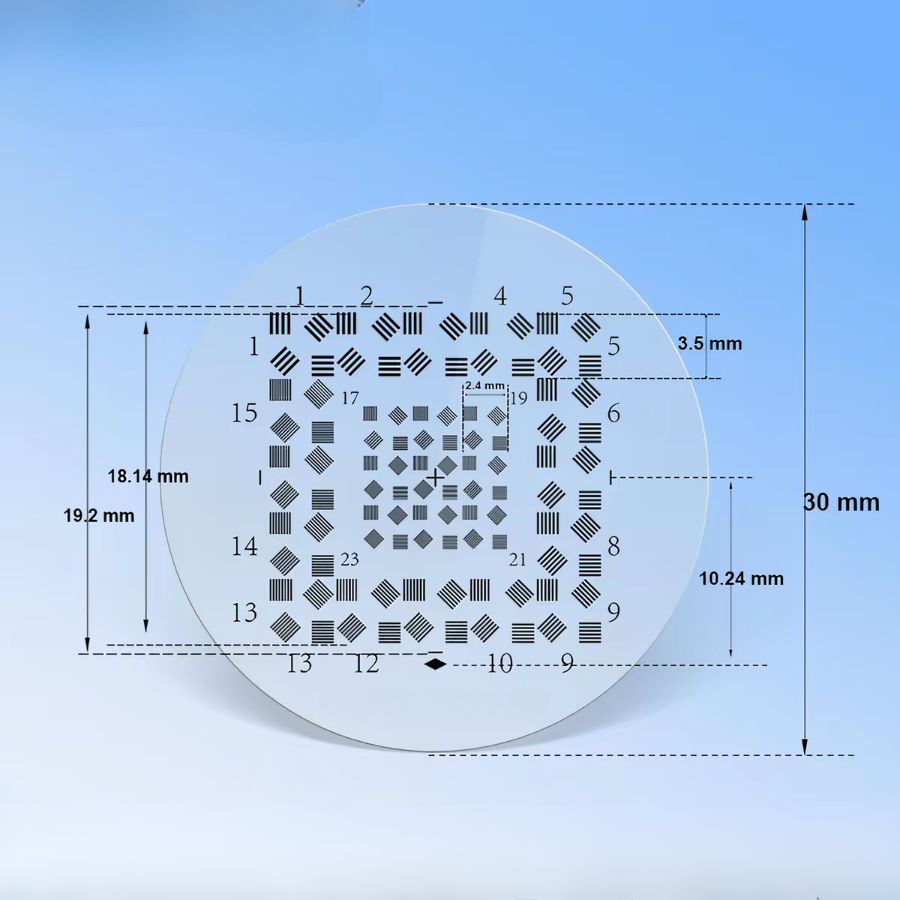
Ø30 mm
A 30 mm circular five-bar target for a compact holder; confirm the chart scale and active field separately.
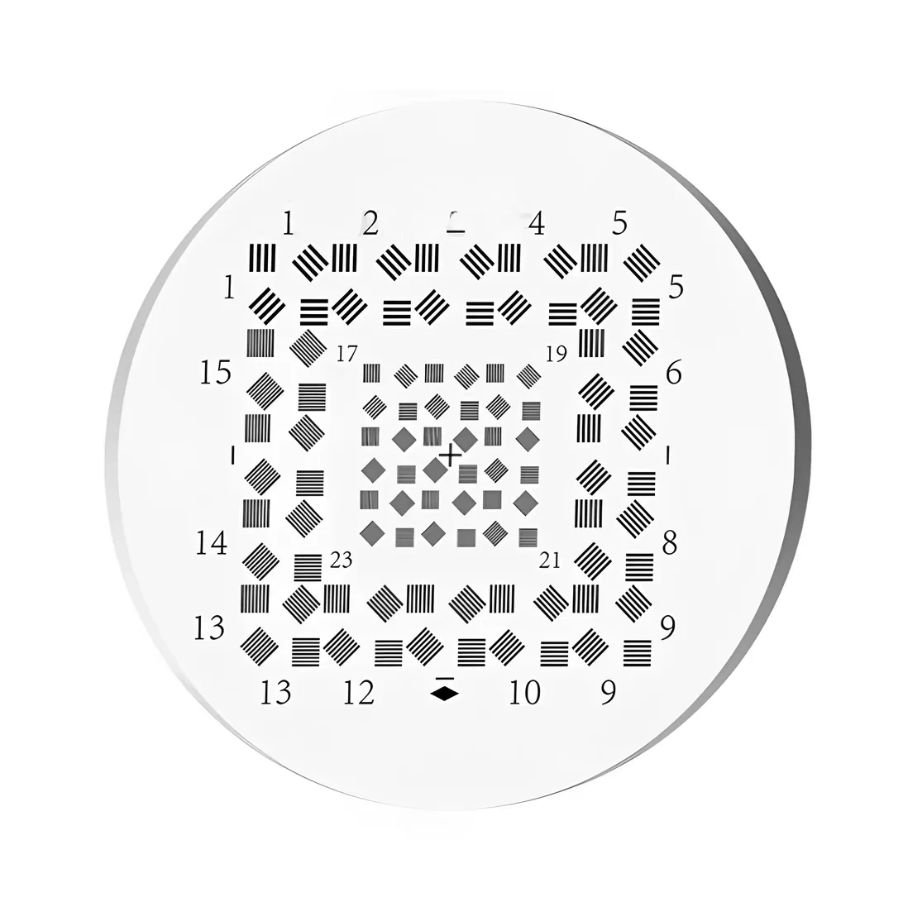
Dimensions to drawing
A reference view of the five-bar artwork. Physical frequency and substrate dimensions come from the approved drawing.
Multi-orientation five-bar fields for comparing resolved detail.
Inspect bar count, line width, gap width, field label, orientation, edge quality and active-area defects. For infinity-conjugate use, record the artwork frequency, collimator focal length and any coordinate or certificate data included in the agreed delivery scope.
The supplied component is the five-bar glass target in the selected artwork and substrate format. The collimator and tested lens are parts of the user’s measurement setup.
NBS 1963A five-bar targets provide differently oriented line groups for comparing imaging resolution.
Use the frequency and angular-scale mapping of the selected NBS artwork. For infinity-conjugate testing, record collimator focal length and imaging conditions.
Artwork reference, frequency range, polarity, substrate outline and collimator setup.
Use the NBS artwork's own labels and frequency map. The USAF three-bar group formula applies to the corresponding USAF pattern.