What the component does
A Walton–Beckett graticule defines a sampling field and visual comparison references for compatible fibre-counting methods.

Define a repeatable microscope sampling field for fibre counting and comparison of airborne-particle deposits.
The eyepiece field must be calibrated for the objective and observation method.
The drawing shows why boundary rules matter; fibre eligibility and counting rules come from the selected method.
A Walton–Beckett graticule defines a sampling field and visual comparison references for compatible fibre-counting methods.
Calibrate the field at the working magnification, then sample the prepared deposit according to the method rather than selecting only visibly dense regions.
An incorrect field size changes the sampled area. A graticule does not identify fibre composition or replace the required sample preparation and optical conditions.
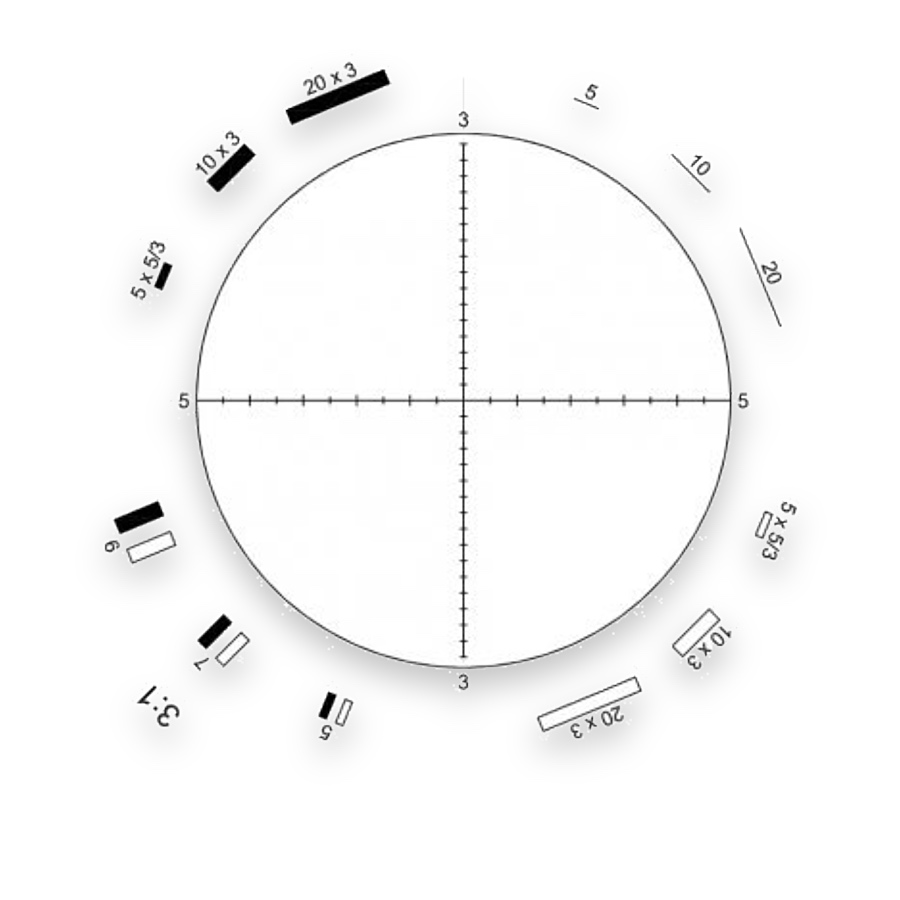
Method-specific fibre counting fields and comparison marks.
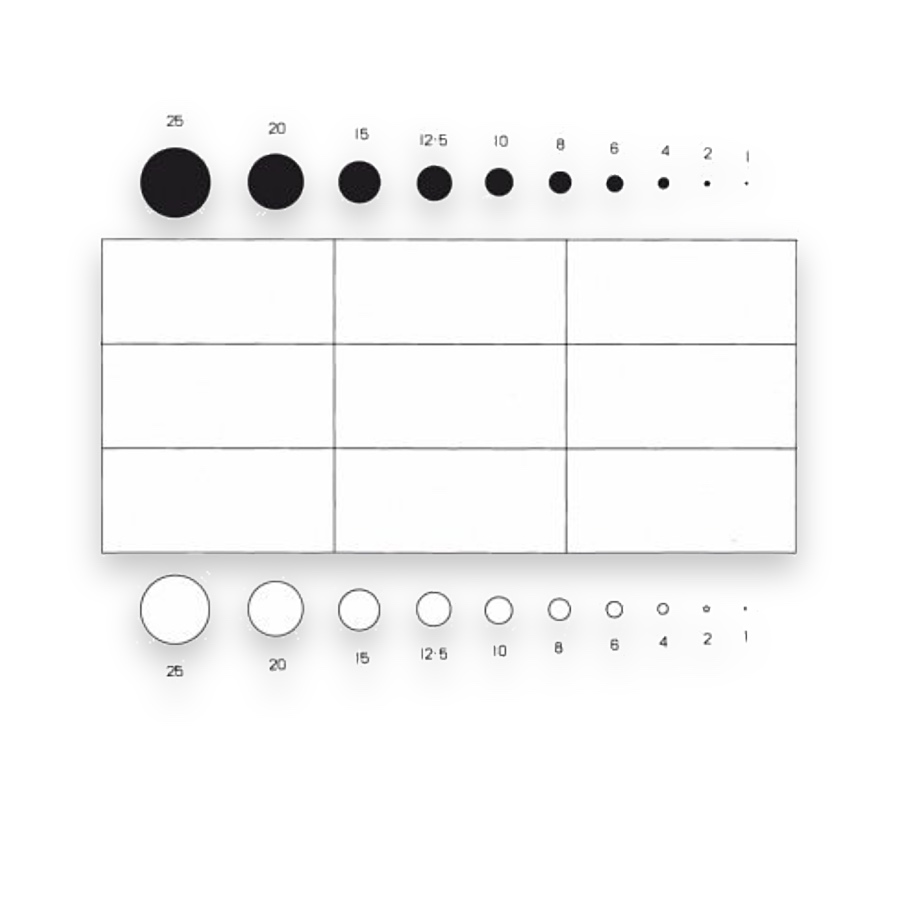
Compare projected dust and particle dimensions.
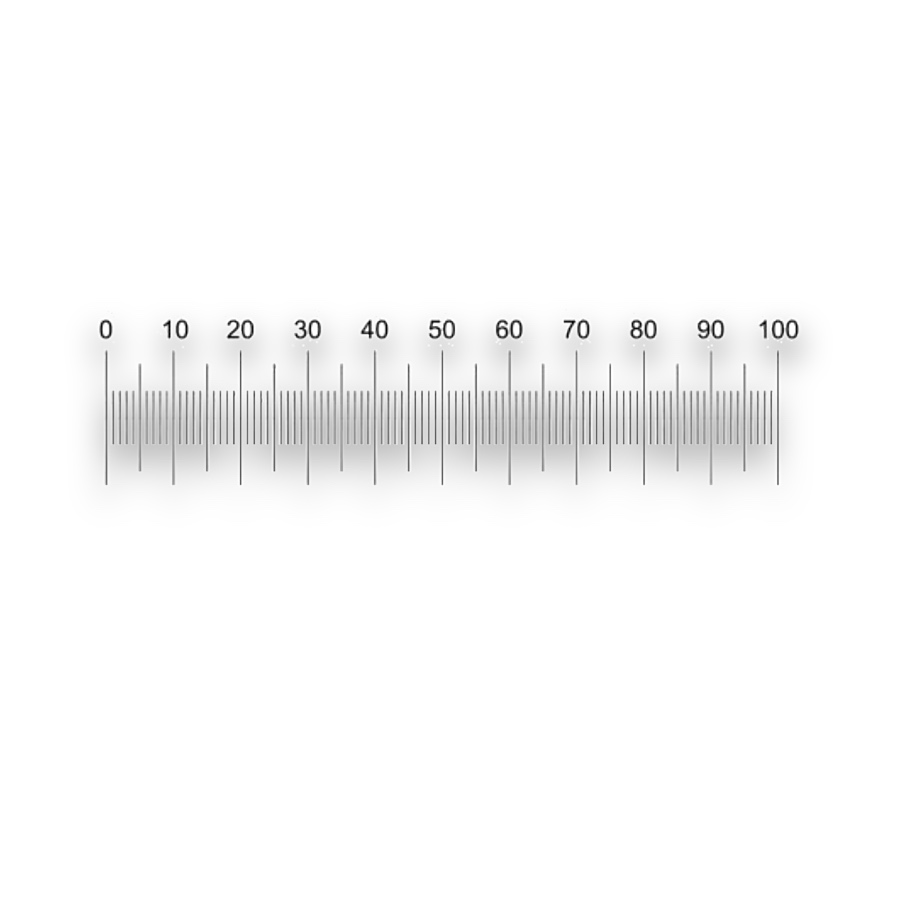
Calibrated eyepiece divisions for feature-length comparison.
Collected samples can contain elongated fibres and irregular particles that need different observation rules. A fibre graticule provides a defined field and comparison features, while particle references help classify projected size. Sample preparation and the selected method determine which features are counted.
Choose a Walton–Beckett pattern when the method requires its counting field and dimensional conventions. Use particle-comparison references for particle-size tasks. Calibrate the field in the actual microscope configuration and distinguish visual counts from chemical identification.
Moving through defined fields helps avoid repeatedly sampling the same region. Keep the field selection, boundary rules and magnification consistent. The graticule supports a counting procedure; sampling adequacy depends on the method and the collected specimen.
Reference circles, aspect-ratio features and counting-field boundaries vary between designs. Choose the actual geometry called for by the method rather than treating G22, G24 and G25 as size variants of one identical drawing.
Fibre and dust microscopy uses defined fields and comparison features to organise observation.
Fibre counting and particle-size classification require different references. Verify field and scale in the actual microscope configuration.
Check each pattern's geometry and comparison features against the actual method. Similar names or appearance do not establish interchangeability.