

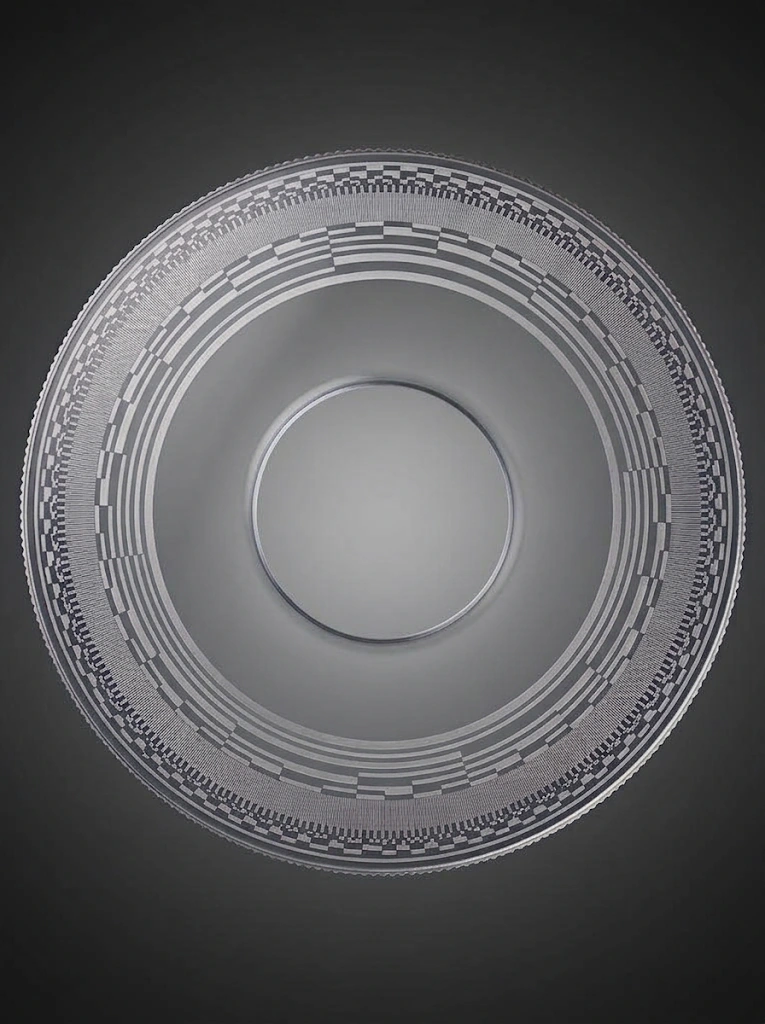
Absolute Encoder Discs

Angular position, defined by your code.

Patterned glass encoder componentCustom formats

Product selection

What it is and what it does

An absolute optical disc carries a position code that the matching reader decodes at the current angle. Multi-track Gray and natural-binary patterns are available code arrangements; custom code sequences use their own reading windows and decoding rules.

When to choose it

Choose it when the instrument needs the current single-turn angle after startup without first travelling to an index. The readable code range and zero direction belong to the disc and decoder together.

How it differs from related products

Absolute describes position identification. Gray, natural binary and pseudo-random sequences describe the code architecture. Turn counting requires additional system mechanisms beyond a single-turn disc.

What can be customised

Code map, bit or sequence arrangement, track radii, fine-track relationship, reading direction, code zero and mounting geometry can be defined as one layout.

What you receive

A patterned glass disc with the selected track layout, mounting geometry and component inspection records. The light source, readhead, decoder and shaft assembly are defined by the instrument design.

Specifications and inspection

Product configuration

Absolute Encoder Discs
SubstrateB270 / K9 / soda-lime glass; fused silica by request
Pattern mediumChromium-on-glass or a specified clear/opaque pattern
Photolithographic line-width tolerance±0.2 µm
Mechanical cutting accuracy±0.02 mm
Thickness≥0.4 mm
Total thickness variation (TTV)≤2 µm
Surface figureλ/4
Optical modeTransmissive or reflective, matched to the readhead wavelength
Maximum disc diameter1500 mm
Pattern-to-bore concentricity≤0.02 mm

Pattern architecture and system fit

A disc or scale is the passive optical reference inside a larger encoder system. The artwork, readhead and mounting datum must be designed together so that the manufactured pattern is read in the intended direction and at the intended contrast.

Pattern and readhead interface
PropertySpecification
Pattern architectureCoded angular tracks matched to the optical readhead and decoder
Code definitionGray code, natural binary or a supplied custom code map
Critical geometryBit count, track radii, track registration and code-zero datum
Readhead interfaceReading direction, wavelength, optical window and transition handling

System resolution and system accuracy are separate from the manufactured CD and outline values. Interpolation, bearing runout, eccentricity, alignment and electronics contribute to the final error budget.

Multi-track glass encoder discs encode absolute angular position through an approved Gray-code, natural-binary or custom code map. Provide the bit count, track order, reading direction, zero datum and sensor geometry together.

Built for your process.

Request a Quote
Absolute Encoder Discs

Pattern options

Gray Code Encoder Discs

Multi-track glass encoder discs using a Gray-code sequence for absolute angular-position sensing with a compatible optical readhead and decoder. Adjacent code words ideally change by one bit, reducing ambiguity at a sector boundary when the optical channels are sampled during a transition.
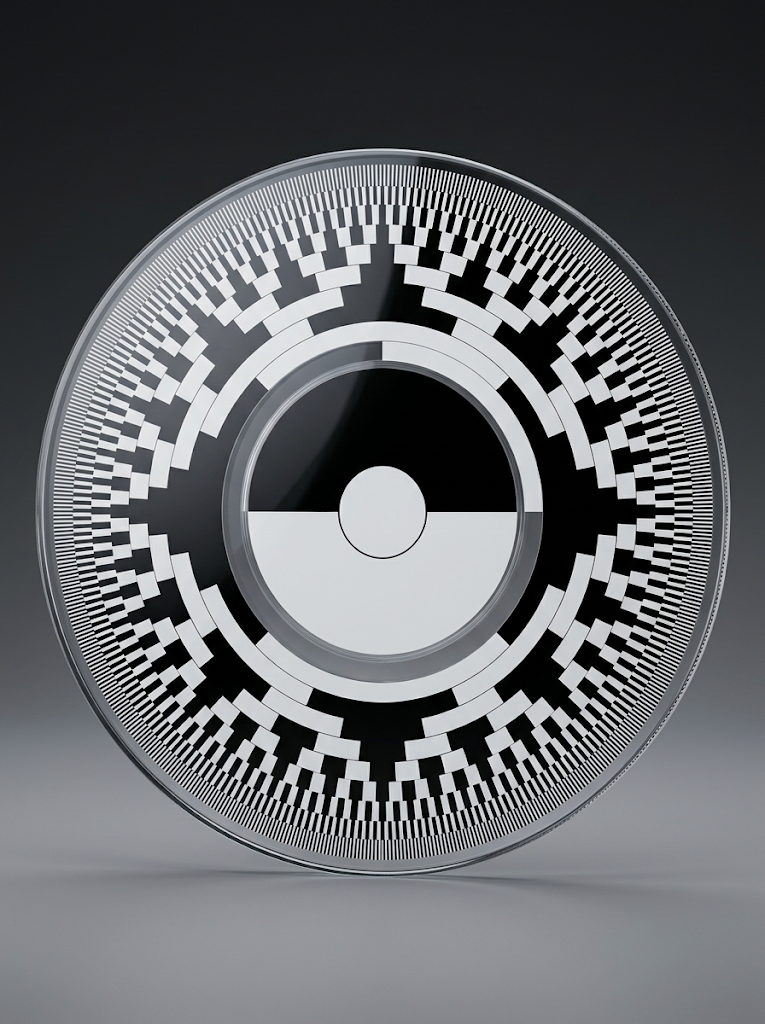
Binary Code Encoder Discs

Glass code discs carrying natural-binary tracks for absolute angular-position measurement in compatible optical encoders. Each concentric track represents a weighted bit, so the approved bit order and reading direction must be unambiguous on the drawing.

Compare the patterns

Product typeWhen to choose it
Gray Code Encoder DiscsChoose it for a decoder that expects a specified Gray sequence, track order and reading direction. It reduces simultaneous bit changes at neighbouring code boundaries.
Binary Code Encoder DiscsChoose it for an existing binary-weighted reading architecture with a defined method for sampling and resolving code transitions.

Select the code architecture for the reader

Where this product is used

Inspection and acceptance

CD is checked against the approved artwork at defined critical features. The finished outline is checked against the mechanical drawing and the tolerance stated in Product configuration. Disc products are additionally checked for pattern-to-bore concentricity; linear scales are checked for pitch, accumulated interval error and reference-mark position.

Inspection record
PropertySpecification
Pattern dimensionsMeasured CD at agreed locations; report nominal and measured values
Outline geometryOuter diameter, bore or scale length checked to the mechanical drawing
RegistrationPattern origin, track-to-bore or pattern-to-datum position
Optical defectsClear/opaque defects, broken lines, pinholes and contamination
TraceabilityDrawing revision, lot identification, inspection method and report
Separate code resolution from angular accuracy

What to include in the drawing

Drawing and inquiry checklist
PropertySpecification
GeometryDisc outer diameter and bore, or scale length, width and thickness
Pattern dataApproved artwork or code map, line count/pitch, polarity and revision
Optical interfaceTransmissive or reflective mode, wavelength, contrast and readhead gap
Datum schemeMechanical datum, pattern origin, index/zero position and orientation
Acceptance recordCD measurement, cutting dimensions, registration, defects and report format

Substrate & optical configuration

Specify substrate material and geometry together with the operating wavelength. For transmissive reading, define clear-area transmission and opaque-track density. Reflective reading also needs the high/low reflectance pair and illumination geometry. Optical contrast must match the readhead, not only the appearance of the part.

Compare transmissive and reflective readout

Technical reading

Selection notes

Absolute encoder discs map angular positions to readable code words using a defined track pattern.

Supply the code map, track and bit order, read direction and zero reference together. Gray, binary and custom codes require their own definitions.

Information for your inquiry

Bit count, full code table, track radii and widths, readhead window, zero and installation datum.

Can a Gray-code disc replace a binary-code disc directly?

Their code sequences and transition rules differ. A change also requires the matching decoder convention, readhead geometry and control logic.

Search