What the component does
Point arrays support fraction estimates; line and cycloid patterns support other estimators under their own rules. They are not interchangeable merely because they fit the eyepiece.

Use a defined test system and representative fields to estimate selected structural fractions from microscope images.
Length-dependent methods need scale calibration. The sampling design is also part of the measurement.
For a suitable point-counting method, the proportion of hits estimates area fraction; three-dimensional interpretation requires appropriate sampling assumptions.
Point arrays support fraction estimates; line and cycloid patterns support other estimators under their own rules. They are not interchangeable merely because they fit the eyepiece.
Select fields and specimen sections systematically according to the study design. Record which feature is counted at each test point or intercept.
Choosing visually interesting fields introduces sampling bias. A finer grid cannot correct an unrepresentative specimen or an incorrect estimator.
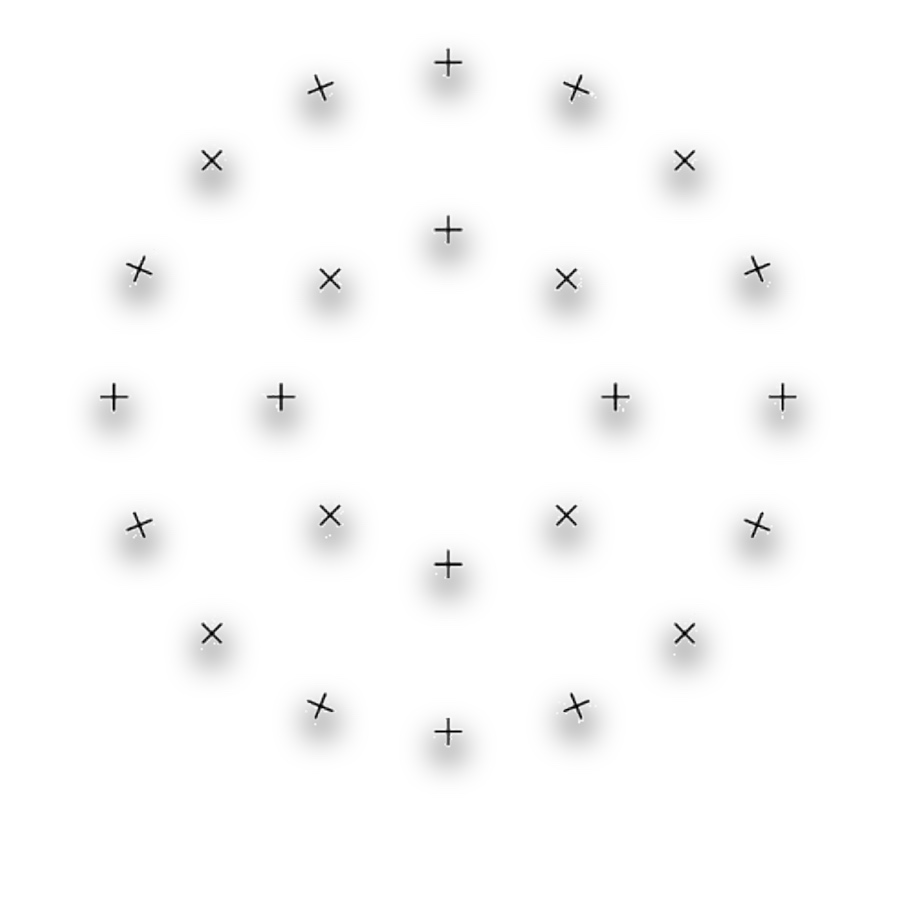
Point arrays for method-defined field sampling.
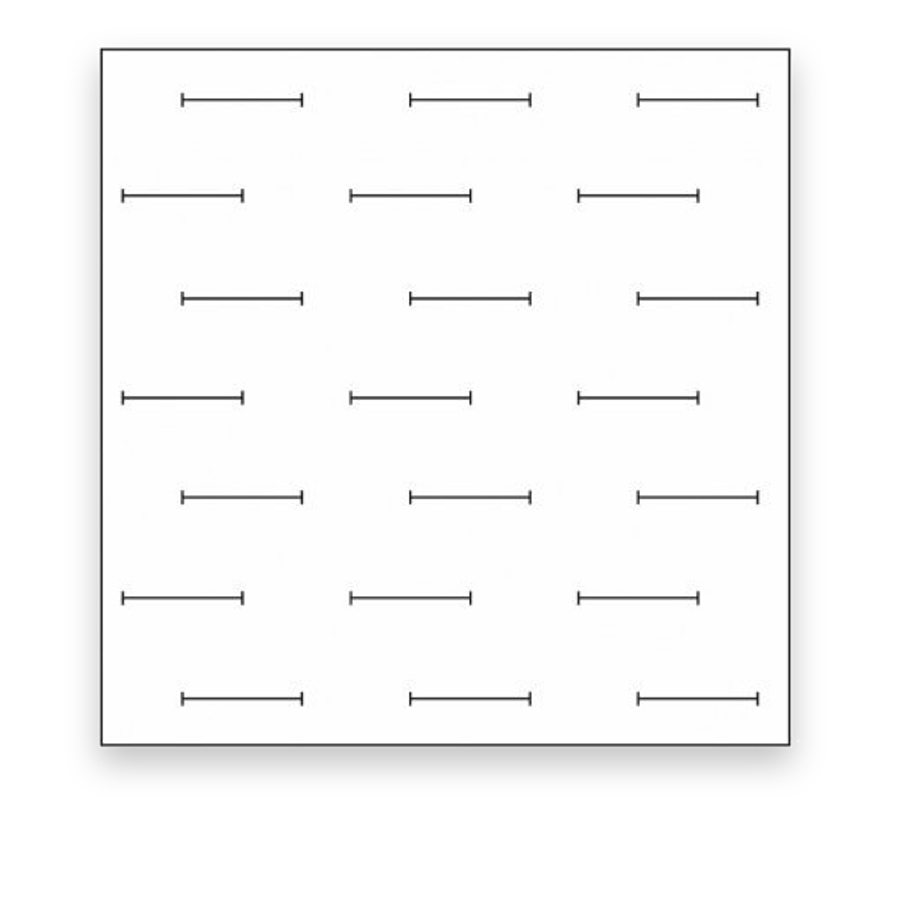
Line probes and related quantitative microscopy references.
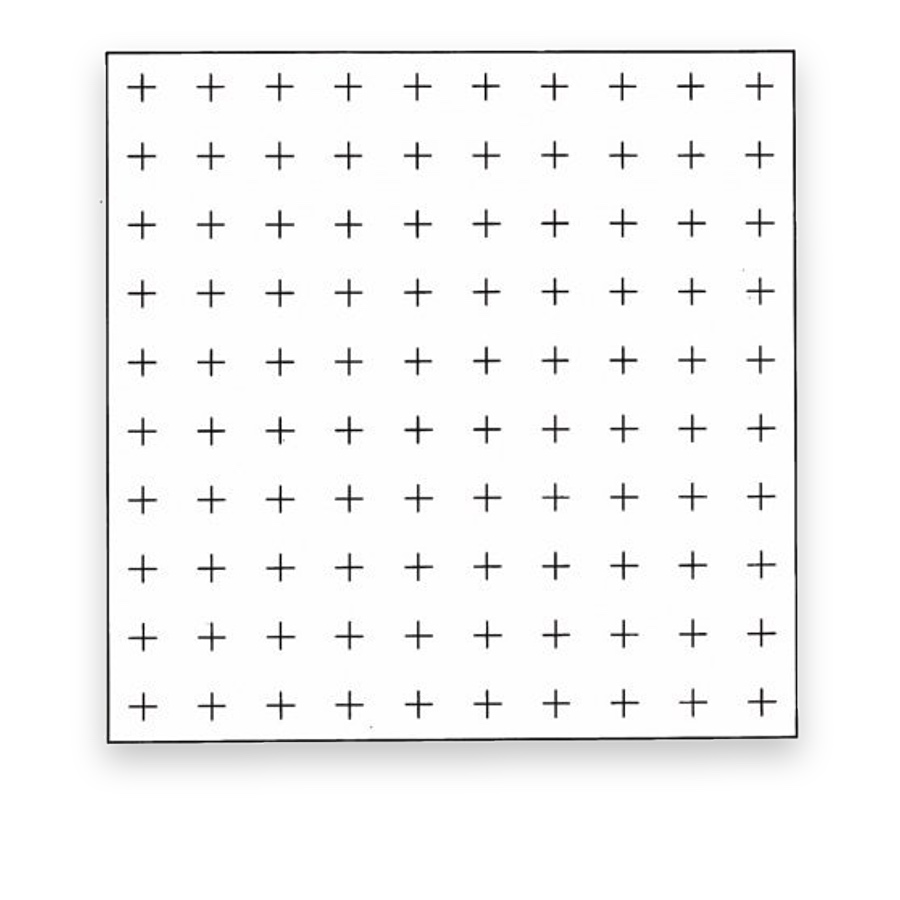
Repeated field subdivisions for counting routines.
Quantitative microscopy uses defined sampling probes to turn observations into counts or geometric estimates. Points, lines and counting frames can be overlaid optically or used as references for image analysis. Their geometry must match the estimator and specimen-sampling design.
Choose point arrays for point-hit sampling and the prescribed line probes for intercept-based methods. Biological tissue and metallographic sections may use similar-looking patterns, but the sampling rules, orientation requirements and reporting quantities can differ.
A known number of points or known test-line length makes repeated observations comparable. It reduces the need to choose an arbitrary region for each field. The reticle contributes the geometric probe, while field selection and counting rules control the estimate.
Weibel, Mertz and Chalkley references use different arrangements and interpretations. Keep the required pattern and its calibration rather than substituting any convenient dot or grid image. Record the method alongside the result so others can reproduce the observation.
Quantitative microscopy and stereology sample representative fields using defined points, lines or counting frames.
The pattern supplies probe geometry. Sample selection, field selection and statistical rules determine the estimator.
No. More probes change information per field but do not replace representative specimen and field selection.