
Counting Chamber Cover Glasses

A cover glass closes the observation region of a counting chamber. Thickness, flatness and contact with the chamber seats affect the final counting geometry.

Counting Chamber Cover Glasses

Configuration and materials

Specify glass grade, dimensions, thickness, surface quality and the mating chamber geometry. Any complete assembly needs defined seating, chamber depth, cleaning compatibility and an agreed verification procedure.

  • Active field, scale or feature geometry and optical-plane location
  • Material, outside dimensions, thickness and mounting datums
  • Working instrument, illumination and viewing side
  • Critical tolerances, inspection intervals and reporting needs

Reading and sampling methods

The cover completes the chamber geometry

A chamber cover seats on the designed supports and forms the upper boundary of the sample. Thickness, flatness and support contact affect the established depth and the observation path.

Calculate counting volume and concentration
Different chamber families need different covers

Howard and Sedgewick–Rafter cover examples belong to different observation arrangements. Match outline, seat and optical thickness to the intended chamber; a general microscope coverslip is not automatically interchangeable.

Choose the pattern for the counting method

Choose by function

What it is and what it does

A cover glass closes the observation region of a counting chamber. Thickness, flatness and contact with the chamber seats affect the final counting geometry.

When to choose it

Define dimensions, thickness, surface quality and any patterned reference. A coverslip photograph does not establish the assembled chamber depth.

How it differs from related products

A counting chamber combines a defined area with a defined depth. Its cover is part of that geometry. A generic grid, ordinary cover glass or differently sized chamber does not preserve the same counted volume.

What can be customised

Choose chamber family, grid layout and matching cover geometry for the specimen method. Howard cells, Sedgewick–Rafter chambers and haemocytometers serve different workflows.

What you receive

The selected item is the chamber cover component, matched to its chamber family. It does not by itself provide the chamber body, a counting grid or a complete diagnostic kit.

Where this product is used

Pattern and format options

Counting Chamber Cover Glasses — Pattern 060

Pattern 060

  • The Howard cover-glass example is associated with a method-specific counting assembly. Confirm the chamber seat geometry and observation arrangement before choosing the replacement cover.
Counting Chamber Cover Glasses — S51

S51

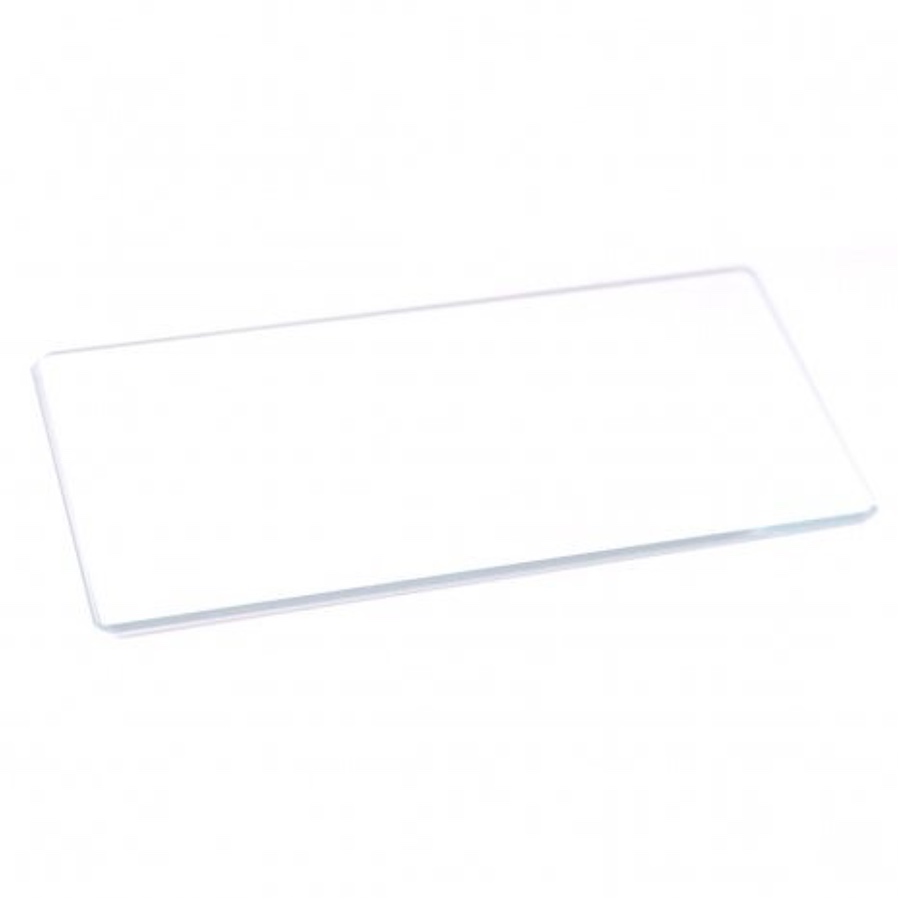
  • This image shows an unpatterned rectangular cover glass. Its role is the chamber cover, so thickness and seating are more relevant than graduation pitch.

Related pattern choices

Selection notes

Counting-chamber cover glasses mate with the chamber support faces to form the specimen layer for counting.

Match the prescribed outline, thickness and seating condition rather than choosing by general microscope-cover dimensions.

Information for your inquiry

Chamber model or drawing, outline, thickness, seating geometry, surface and inspection requirements.

Can an ordinary microscope cover glass replace it?

First check the chamber's specified dimensions and seating structure. Use a cover that meets those requirements.

Search