
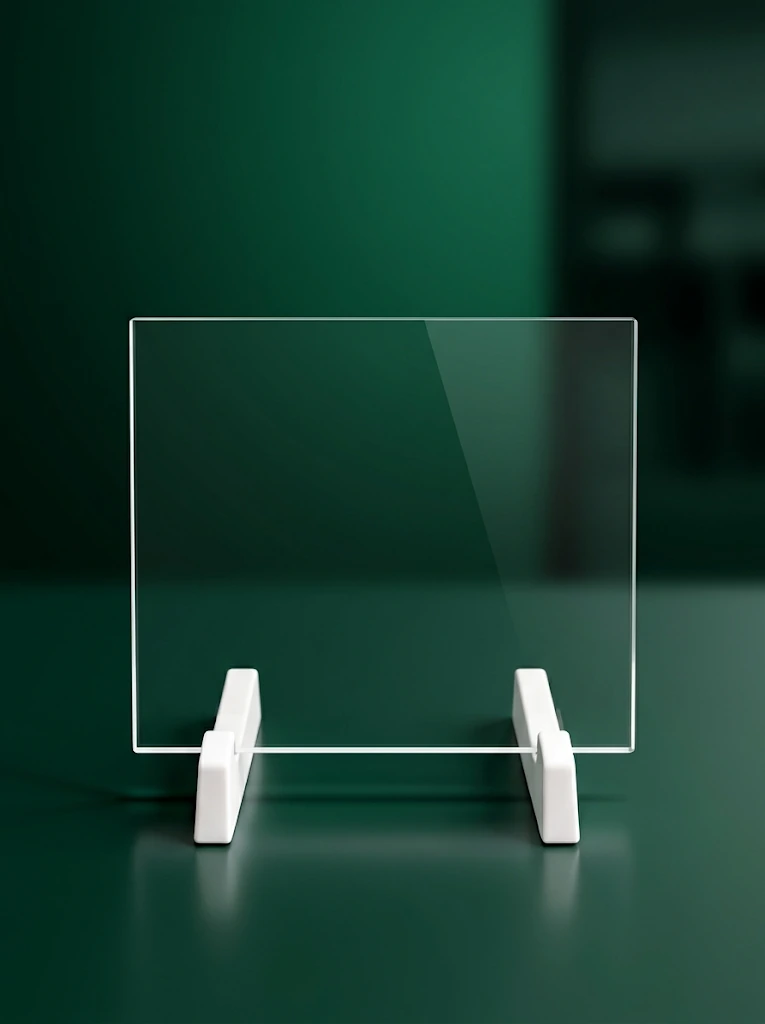
Fused Silica Substrates

Fused silica substrates for UV photolithography, microfabrication and precision optical patterning.

Stability starts with the substrate.

Uncoated glassCustom formats

Product selection

What it is and what it does

The material is selected when dimensional stability, ultraviolet transmission or thermal behavior matters to the pattern and the exposure process. The specification should identify fused silica clearly; “quartz” is a broader term and should not replace the material designation in a technical drawing.

When to choose it

Choose fused silica for an optical path or patterning process where UV transmission and dimensional stability matter more than selecting the lowest-cost general glass.

How it differs from related products

Fused silica is amorphous silica, while crystalline quartz has a different structure and optical behaviour. Compared with common soda-lime glass it offers much lower thermal expansion; transmission depends on grade, wavelength and thickness.

What can be customised

Material grade, outline, thickness, polished area and edge finish define the substrate. Coated versions also allow a film stack and resist preparation matched to the downstream exposure and etching process.

What you receive

The supplied item is an unpatterned substrate or coated blank in the selected process state. A finished reticle, encoder track or exposure mask requires a subsequent patterning step. Handling, storage and any accompanying inspection data depend on the selected coating and order.

Specifications and inspection

Product configuration

Fused Silica Substrates
MaterialSynthetic fused silica
Square formats3 / 4 / 6 / 7 / 8 / 9 in
Thickness≥0.3 mm
Total thickness variation (TTV)≤2 µm
Flatness≤2 µm

Technical specifications

Precision photomask substrates
PropertySpecification
MaterialSynthetic fused silica
Square formats3 / 4 / 6 / 7 / 8 / 9 in
Thickness≥0.3 mm
Total thickness variation (TTV)≤2 µm
Flatness≤2 µm

Polished surfaces are supplied to Grade 0 appearance requirements. Surface-quality grading and the test wavelength for λ-based surface figure are specified on the order drawing.

Choose the substrate for your wavelength and temperature range

Soda-lime glass is a practical starting material for many visible-light masks and patterned components. Low-expansion glass reduces thermal dimensional change. Fused silica is a strong choice when ultraviolet transmission and low thermal expansion are central requirements. Specify the exact glass grade; borosilicate glass and fused silica are not interchangeable names.

Thermal-expansion comparison for substrate selection
Substrate materialTypical linear CTE (×10⁻⁶ K⁻¹)
Fused silica (quartz glass)0.4–0.5
Low-expansion glass3.7
Soda-lime glass9.4

These typical CTE values support material selection. The grade and temperature interval used for a dimensional calculation must be defined on the material specification. A generic low-expansion value does not identify a particular borosilicate grade.

For UV use, specify transmittance at the actual exposure wavelength and substrate thickness. The UV cut-on of soda-lime, white crown and borosilicate glass differs by grade. A thicker substrate can transmit less near its absorption edge; curves measured at different thicknesses are not directly interchangeable.

Fused silica substrates provide a stable, low-expansion base for demanding photolithography, UV optical and microfabrication applications.

Built for your process.

Request a Quote
Fused Silica Substrates

Where it fits in the process

Choose fused silica when ultraviolet transmission, low thermal expansion or dimensional stability is part of the optical and patterning requirement.

Small-format substrate flatness options

Choose the format code, glass material and flatness limit together. Each number below is a selectable maximum flatness in micrometres, not a thickness tolerance or a minimum-to-maximum range. These format-based options are separate from the precision-grade specifications above and the coated-blank dimensional schedules.

Flatness by format and glass type
Format codeFused silica: available flatness limits (µm)
40042 / 5 / 6 / 10
40062 / 5 / 6 / 10
40092 / 5 / 6 / 10
50062 / 5 / 6 / 10
50092 / 5 / 6 / 10
60092 / 5 / 6 / 10
60122 / 5 / 6 / 10
60252 / 5 / 6 / 10
70102 / 5 / 6 / 10
70122 / 5 / 6 / 10
Small-format edge and parallelism options
PropertySpecification
Edge preparationGround edges with a 45° chamfer
Edge squareness: linear deviation / reference length<0.015 in / 1 in
Face-to-face thickness difference|A − B| <5 µm

The linear squareness option is separate from the 90° ±5′ blank-edge specification. The A/B requirement compares thickness at two specified locations and does not replace a full-aperture TTV measurement. Identify the selected edge specification, measurement positions, clear aperture and flatness test method on the drawing.

What can be customized

  • Fused silica grade and spectral range
  • Dimensions, thickness, flatness and parallelism
  • Surface quality, edge finish and cleanliness
  • Packaging and inspection documentation

Where this product is used

Common questions

Is fused silica the same as quartz?

They are related terms but should not be treated as interchangeable in a technical specification. Identify the exact material required for the application.

Why choose fused silica?

Fused silica is commonly selected for its dimensional stability, low thermal expansion and useful UV transmission.

Can fused silica be chrome coated?

Yes, when the following patterning process requires a chrome-coated blank.

Selection notes

Fused silica substrates provide a low-expansion transparent base for optical coatings, photolithographic patterns and ultraviolet optical components.

Specify the actual silica grade, working spectrum, thickness and surface requirements. Separate the optical clear aperture from the edge used for mounting.

Information for your inquiry

Silica grade, wavelength range, outline, thickness, clear aperture, surface quality and edges.

Is a bare fused silica substrate a finished photomask?

A bare substrate supplies the material and finished surfaces. A functional photomask also needs the specified opaque pattern; chrome-coated and resist-coated supply states support the intervening process steps.

Search