
Custom Glass Pattern Masters

Keep repeated pattern transfer tied to one design.

Glass pattern masters carry the approved design for subsequent pattern transfer. Artwork revision, master orientation and repeat-use requirements define the specification.

Custom Glass Pattern Masters

Product selection

What it is and what it does

A glass master carries the controlled artwork used to make repeat copies or expose subsequent patterned parts. Master identity, revision and viewing side must stay consistent with the copying process. An optical pattern master is not a relief mould.

When to choose it

Choose a master when multiple parts must originate from one approved design. State whether the master will be used for contact copying, exposure or inspection comparison.

Product selection and delivery

How it differs from related products

A master is a controlled source for making copies; an instrument reticle is used directly in the optical system. Copy polarity and viewing side depend on the replication route, so an image that looks identical may need a different master orientation.

What can be customised

Master layout, fiducials, identifiers, repeat fields, copying polarity and protected handling borders can be coordinated.

What you receive

The selected deliverable is the master plate used as the controlled source for replication. Replica parts are a separate quantity and process stage; master identity, copy orientation and revision should remain linked.

Specifications and inspection

Product configuration

Custom Glass Pattern Masters
Master identityDrawing revision, layer and part identification
Transfer conventionFilm side, polarity and required copy orientation
Reference featuresActive field, alignment marks and inspection positions

Inspection requirements

Record critical pattern dimensions, polarity, datums and artwork revision; define defect acceptance separately for the master and its copies.

The master defines the approved pattern

A glass pattern master serves as the reference for repeated optical copying or exposure. It may also be used for an agreed visual comparison. The master needs a distinct part number and revision so production copies can be associated with the design from which they originated.

Review the complete transfer chain

The viewing side, film side and required copy polarity must be defined together. A correct-looking master does not guarantee a correctly oriented copy. Define any scale factor or process compensation separately from nominal geometry and approve it for the intended copying process.

Protect the reference over repeated use

Handling, cleaning and contact exposure can affect the patterned surface. Define protected areas and a reinspection approach suited to the process. Keep a record of defects or repairs that could be reproduced in later copies; this is an optical master, not a relief mould.

Pattern and format options

Choose the functional geometry first, then define its size, orientation and mounting relationship.

Single-pattern master

One controlled pattern for the agreed copying route.

Repeated-field master

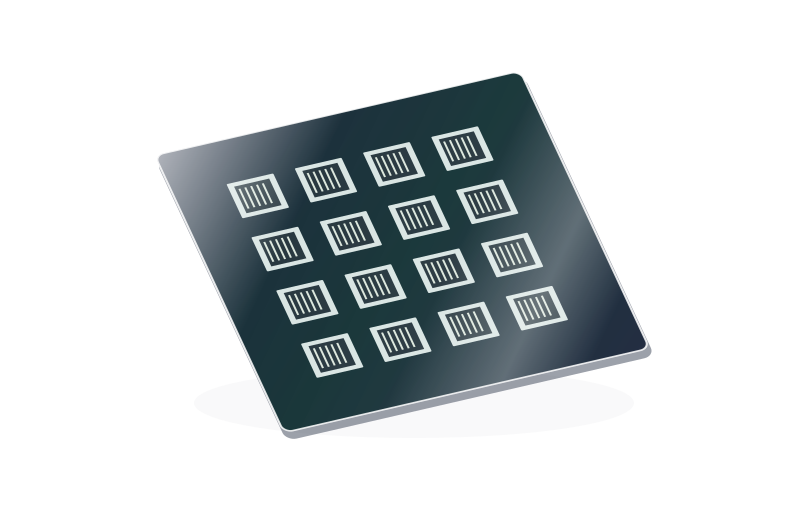
Multiple pattern cells with defined pitch and shared references.

Define the component and its inspection

Control itemInformation to confirm
Geometry and position
  • Approved master artwork
  • Transfer polarity and orientation
  • Inspection records and revision identification
Substrate and optical pathSpecify glass grade, thickness, wavelength and illumination side. Review transmission and reflections in the actual optical arrangement.
Inspection and acceptanceRecord critical pattern dimensions, polarity, datums and artwork revision; define defect acceptance separately for the master and its copies.
Drawing and revisionProvide a 1:1 DWG with declared units, clear and opaque layers, viewing direction, active area and the approved revision.
Preparing your DWG drawing

Where this product is used

Common questions

Will every copy have exactly the master dimensions?

The copying process has its own dimensional error budget. Specify allowable copy variation and any artwork bias required by that process.

Related products

Selection notes

Custom glass pattern masters carry approved reference geometry for subsequent transfer or replication.

Control scale, polarity, orientation and revision so every copy traces to the intended master artwork.

Information for your inquiry

Master artwork, units, scale, polarity, viewing direction, substrate and revision.

Can a changed design keep the same master identification?

Assign a corresponding revision to the changed artwork and master to prevent mixing different dimensions or orientations during replication.

Search