
Protractor Reticles

Radial divisions and an angular scale provide a reference around a defined centre. Full-circle and sector layouts serve different viewing tasks.

Protractor Reticles

Configuration and materials

Specify optical glass or fused silica, overall dimensions, thickness, pattern-side orientation and the clear aperture. Define transmission, reflectance or optical density at the working wavelength when optical contrast is critical.

  • Active field, scale or feature geometry and optical-plane location
  • Material, outside dimensions, thickness and mounting datums
  • Working instrument, illumination and viewing side
  • Critical tolerances, inspection intervals and reporting needs

Using the reference in the instrument

Direction and included angle

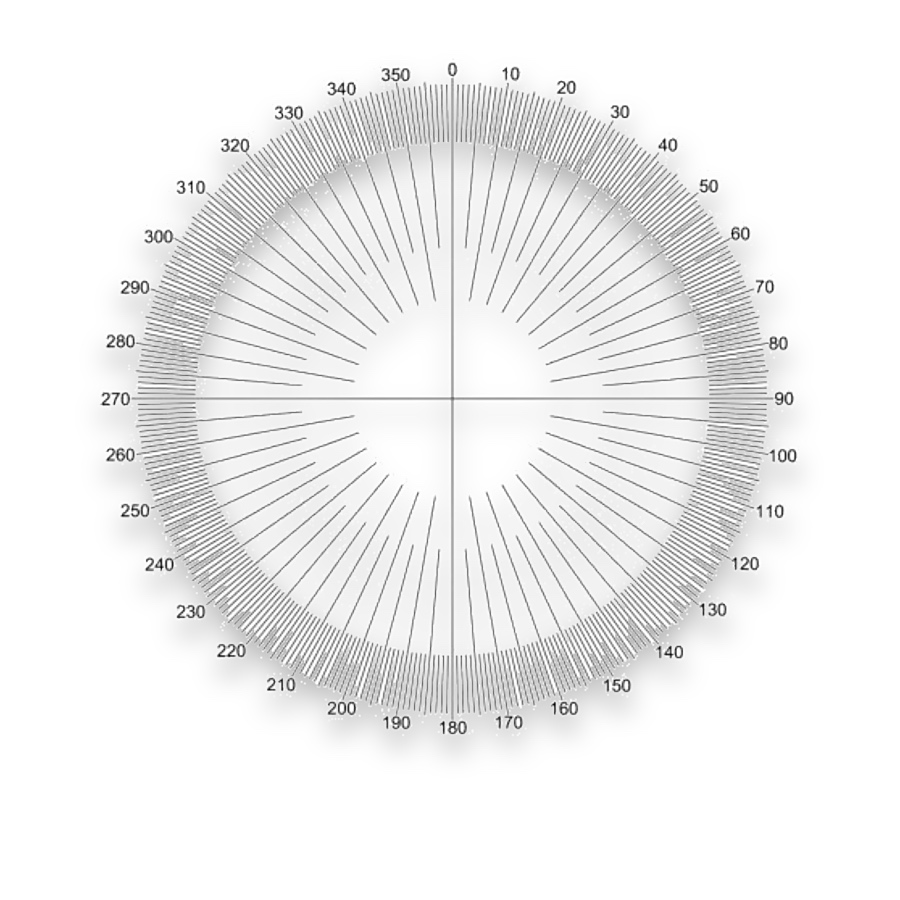
A protractor pattern compares edges or axes in the observed image with an angular reference. It is useful for measuring microscopes and profile comparison when the feature and reference share a defined viewing plane.

Optical references in measuring instruments
Projection affects the result

An in-plane angle can be preserved by uniform magnification, but tilted objects and unequal X/Y scaling change the projected angle. Zero direction, image rotation and optical distortion must be checked independently of graduation spacing.

Check alignment in the complete instrument

Choose by function

What it is and what it does

Radial divisions and an angular scale provide a reference around a defined centre. Full-circle and sector layouts serve different viewing tasks.

When to choose it

Use a protractor pattern when orientation or an included angle is the observation of interest, such as comparing edges and aligning a visible feature to an angular reference.

How it differs from related products

A protractor reads direction or included angle in an image plane. A length scale reads distance after calibration; concentric rings compare centre and radial extent. Out-of-plane tilt can change the projected angle.

What can be customised

Line geometry, graduations, labels, field diameter, substrate thickness and mounting outline can be matched to the instrument. Contrast and line density should allow the reference and the specimen to remain visible together.

What you receive

A patterned glass reference component with the selected graduations, outline and mounting dimensions, accompanied by the specified inspection records.

Where this product is used

Pattern and format options

Protractor Reticles — M6T50

M6T50

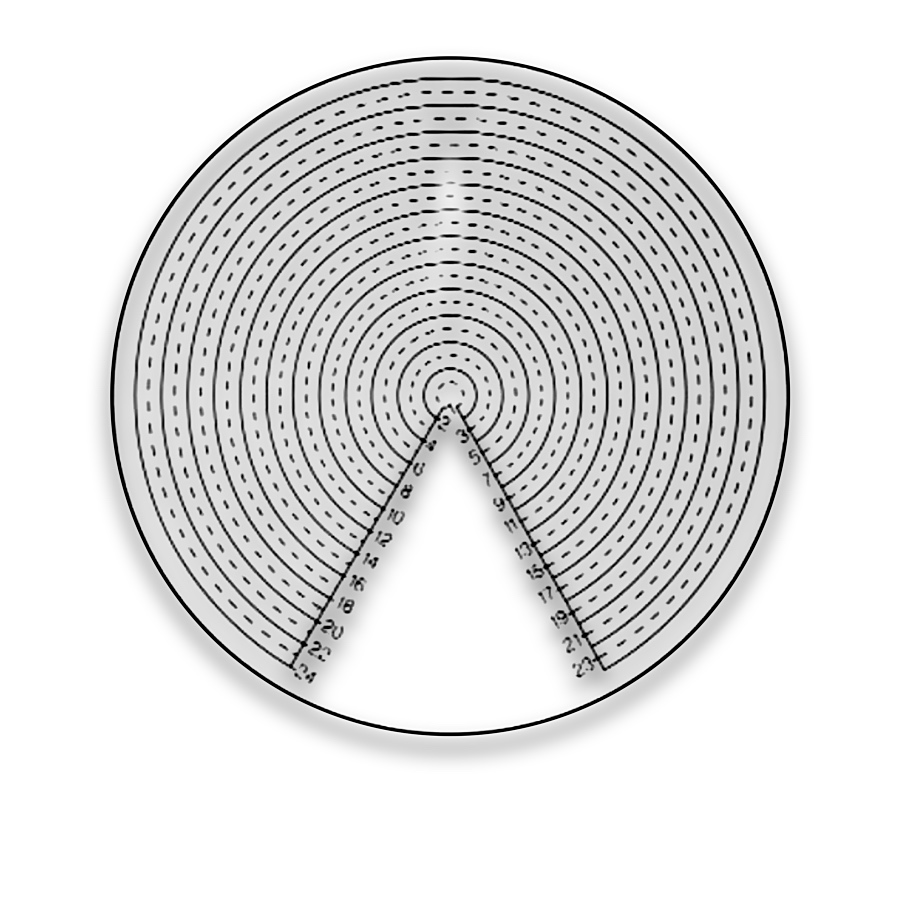
  • The circular layout uses repeated angular arcs with a sector opening. Specify the angular range and zero orientation from the full drawing.
Protractor Reticles — NE45

NE45

Related pattern choices

Selection notes

Protractor reticles use radial lines and angular graduations as references for direction and included angles.

Define the angular range, smallest graduation, numbering direction and centre location relative to the instrument mount.

Information for your inquiry

Angular range, division spacing, zero direction, labels, centre and substrate dimensions.

Does an angle scale directly give a workpiece angle?

The workpiece and scale must share the intended viewing geometry, centre and zero direction. Interpret the reading in the instrument configuration.

Search