Crosshair Reticles

A crosshair reticle provides a visible centre and two reference directions inside a viewing or alignment instrument. It supports repeatable positioning of a target, optical axis or component edge.

Crosshair Reticles

Configuration and materials

Specify optical glass or fused silica, overall dimensions, thickness, pattern-side orientation and the clear aperture. Define transmission, reflectance or optical density at the working wavelength when optical contrast is critical.

  • Line width, centre gap and arm length
  • Cross intersection relative to the mounting datum
  • Readable side, clear field and illumination arrangement

Using the reference in the instrument

A visible axis in a telescope

In surveying telescopes, alignment optics and astronomical guiding eyepieces, the intersection locates the target relative to the instrument axis. An open centre preserves small target details; heavier outer arms help the eye find the centre.

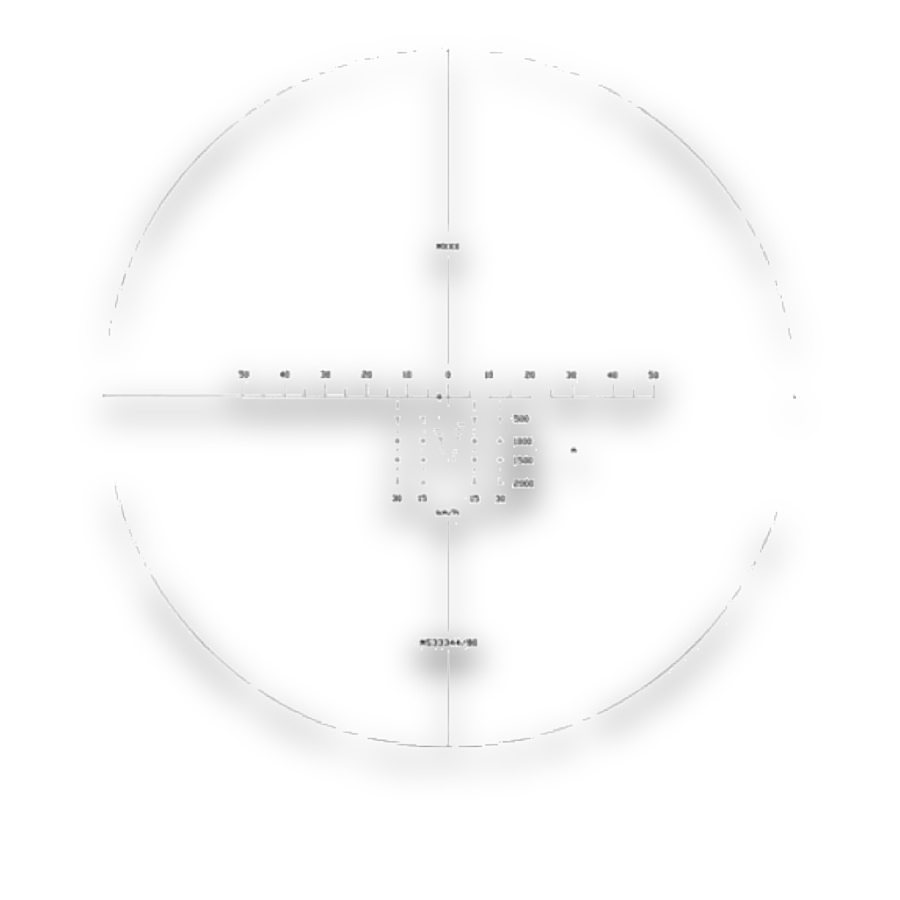
Crosshairs, encoder circles and surveying readout

Contrast without obscuring the target

Line visibility depends on image brightness, magnification and illumination. Pattern focus and target focus are separate adjustments; moving the eye across the exit pupil reveals residual relative motion.

Distinguish eyepiece focus from parallax

Choose by function

What it is and what it does

A crosshair reticle provides a visible centre and two reference directions inside a viewing or alignment instrument. It supports repeatable positioning of a target, optical axis or component edge.

When to choose it

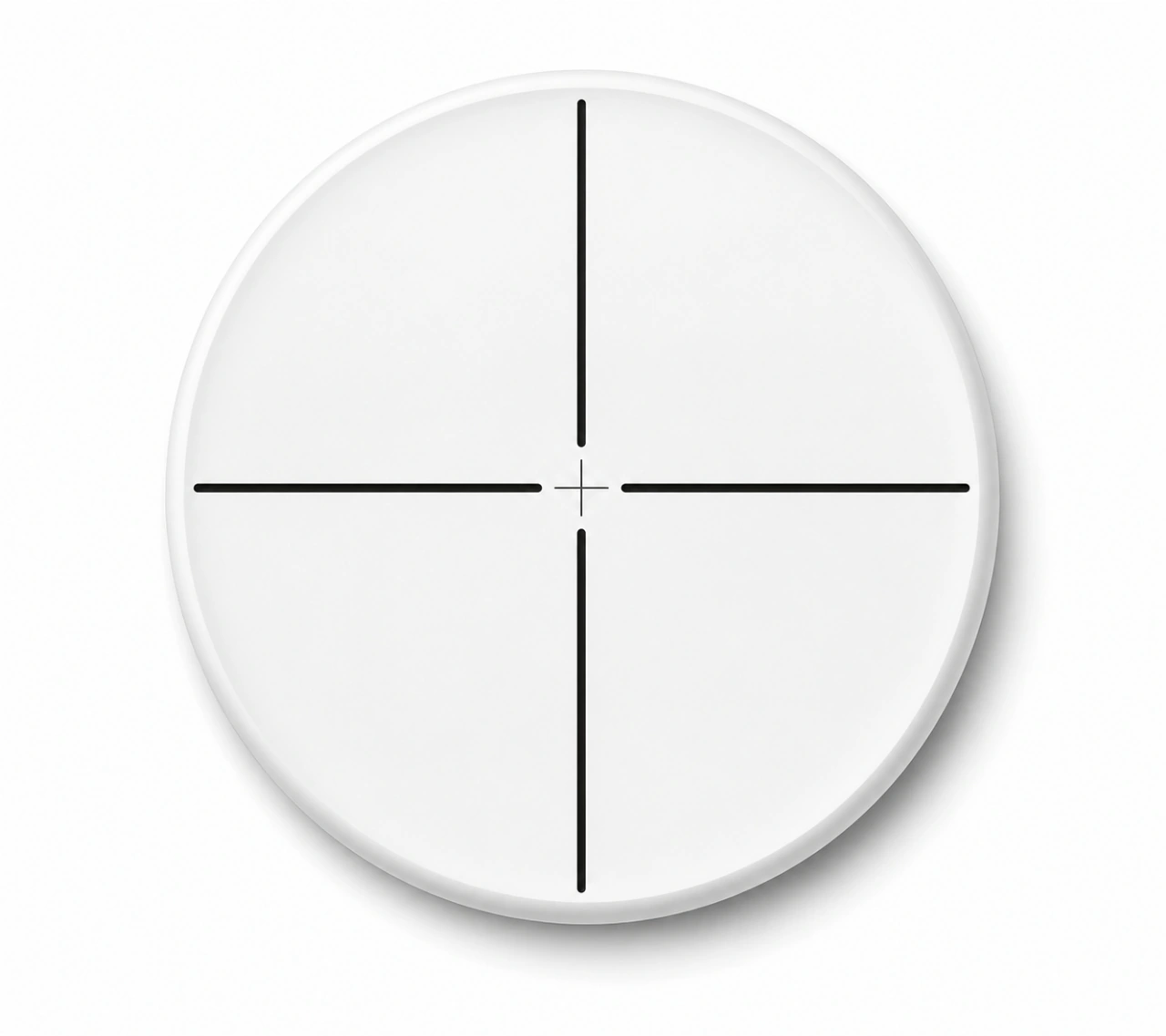
Use a plain cross for centring, an interrupted cross when the target centre must remain visible, or a graduated cross when positional offsets also need to be compared.

How it differs from related products

A plain cross establishes position and direction. A crossed scale adds length references; concentric circles add radial references. In an aiming optic, the apparent angular value depends on the optical design and reticle plane.

What can be customised

Line width, centre gap, arm length, angular reference marks and clear field can be defined independently. Pattern centring must refer to the mounting datum that actually locates the disc.

What you receive

A patterned optical disc for integration into the viewing assembly, with the cross geometry and its position defined relative to the part.

Where this product is used

Pattern and format options

Crosshair Reticles — Crosshair with an open centre

Crosshair with an open centre

Crosshair Reticles — Pattern 196

Pattern 196

Crosshair Reticles — Pattern 010

Pattern 010

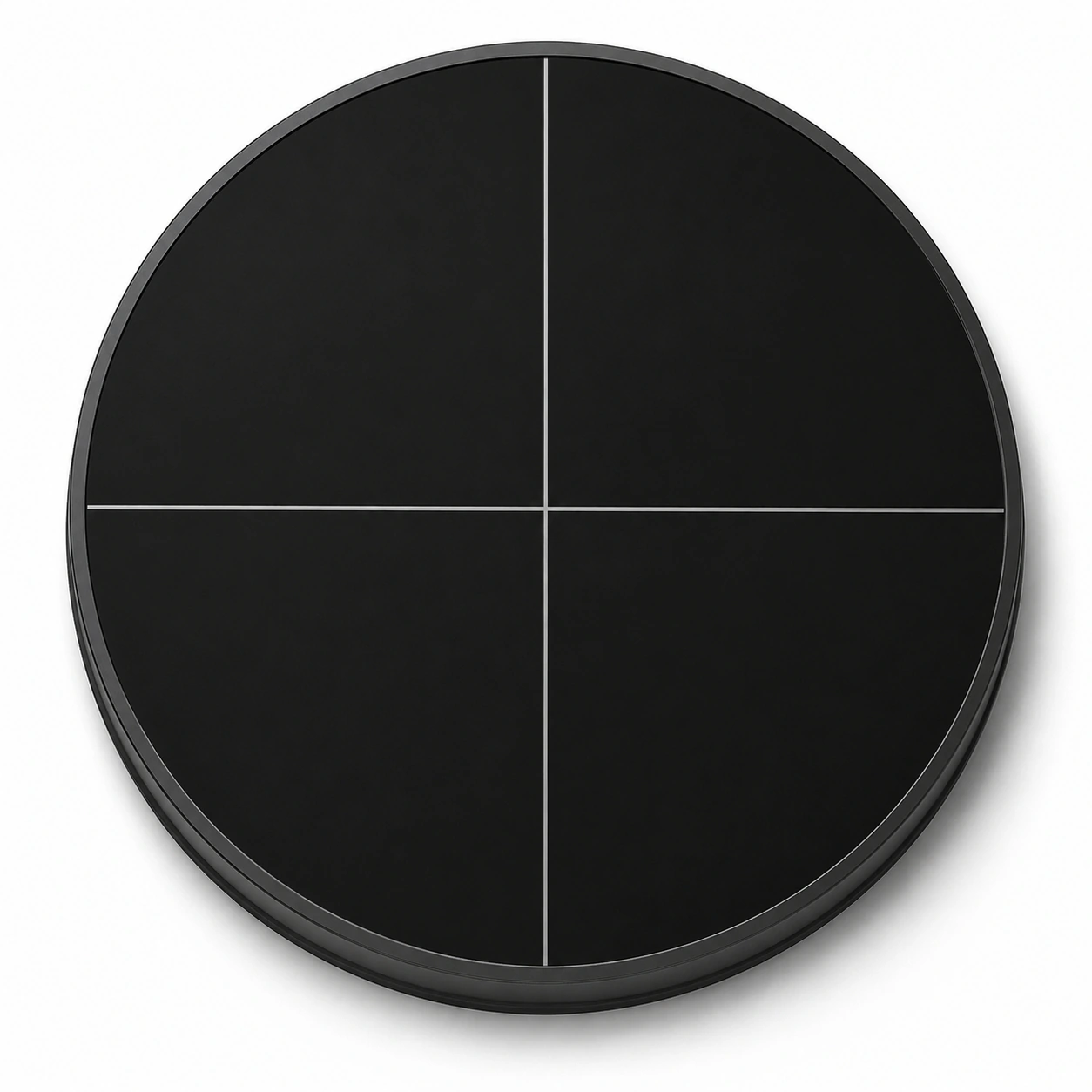
Crosshair Reticles — Light crosshair on a dark field

Light crosshair on a dark field

Common questions

Can a plain crosshair measure distance?

It supplies a reference centre, not a calibrated length. Quantitative offsets require graduations or a calibrated image coordinate system.

Should every crosshair have a centre gap?

No. A continuous crossing suits strong centring references; a gap suits targets whose central detail must remain visible.

Does the pattern define the final aiming accuracy?

Pattern placement is one contribution. Optical alignment, mounting, focus and the instrument calibration also affect the result.

Related pattern choices

Technical reading

Selection notes

Crosshair reticles add a centre and two reference directions to an instrument field for aiming, centring and optical alignment.

Choose line width, central opening and arm length for the viewing magnification; locate the intersection relative to the mounting datum.

Information for your inquiry

Line width, arm length, centre gap, intersection position, outline, thickness, film side and illumination.

What is the purpose of an open centre?

It reduces obstruction of a small target while the surrounding arms retain a centre reference. Choose the opening for the observation task.

Search