UV optical paths
For transmitting light in optical and analytical instruments. Specify transmission at the actual wavelength and finished thickness.

Custom JGS2 UV-grade fused quartz substrates for optical instruments, coating and photolithography. Specify shape, thickness, surface quality and working wavelength.
TL OPTIK supplies JGS2 fused quartz substrates as circular discs, rectangular plates and custom outlines for optical instruments, coating and photolithographic processing.
Define the working wavelength, thickness and optical surface requirements together to select a substrate suited to your next process.
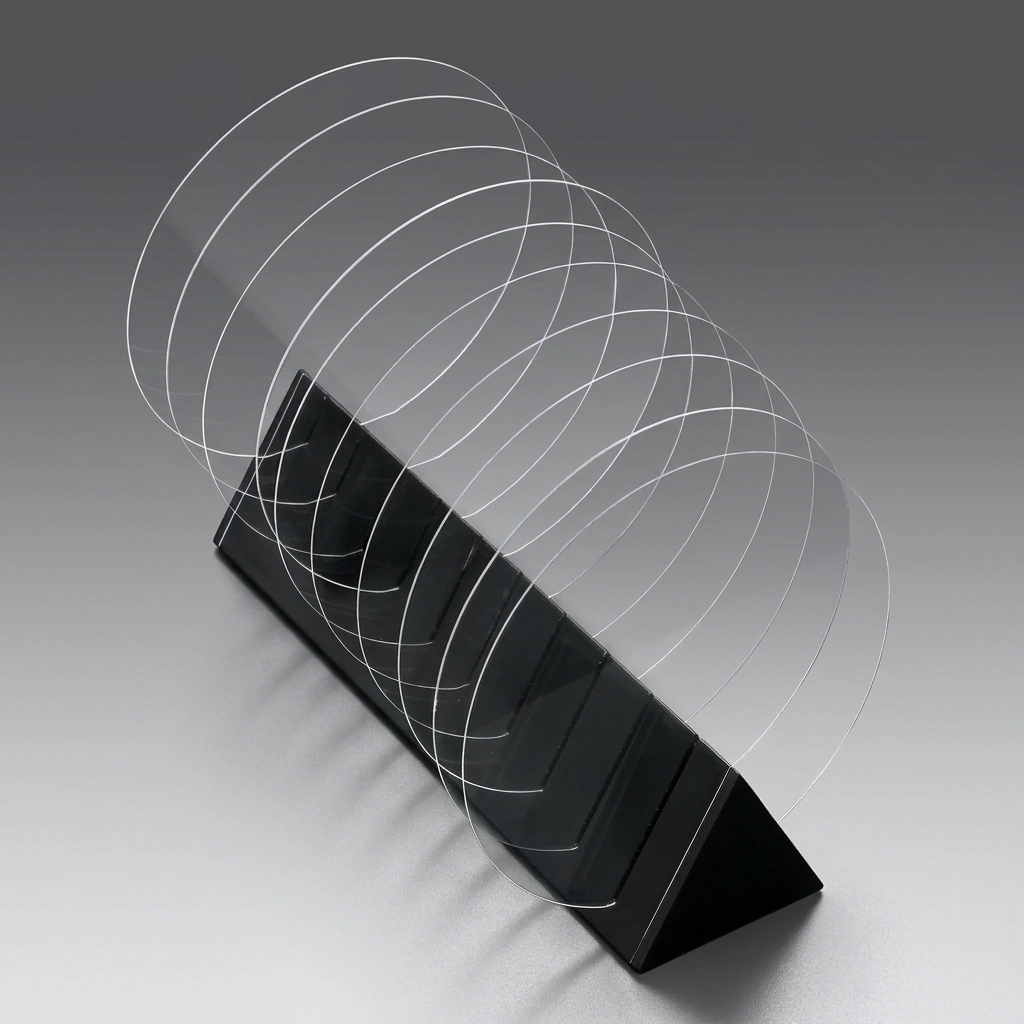
Choose the geometry and surface finish around the role the substrate will perform.
For transmitting light in optical and analytical instruments. Specify transmission at the actual wavelength and finished thickness.
A polished base for a specified optical coating. The aperture, surface quality and coating area should suit the deposition process.
A low-expansion base for optical patterns. Review material transmission, flatness and resist compatibility for the exposure process.
The material grade identifies the starting glass. The drawing defines the finished substrate, and transmission is agreed at the required wavelength and thickness.
| Property | Specification |
|---|---|
| PropertyMaterial | SpecificationJGS2 UV-grade fused quartz; confirm the supplied material grade |
| PropertyProduct type | SpecificationUnpatterned optical substrate; coating or patterning by separate specification |
| PropertyReference spectral range | SpecificationApproximately 220–2500 nm; a material selection reference, not a guaranteed transmission band |
| PropertySubstrate shape | SpecificationCircular, rectangular and custom outlines, subject to drawing review |
| PropertyDimensions and thickness | SpecificationDiameter or length × width, thickness and tolerances to drawing |
| PropertyPolished surfaces | SpecificationSingle- or double-side polishing, as specified for the optical path |
| PropertyFlatness and parallelism | SpecificationSpecify flatness with test wavelength and aperture; specify parallelism separately |
| PropertySurface quality and roughness | SpecificationSpecify scratch-dig criteria and roughness metric with the inspection method |
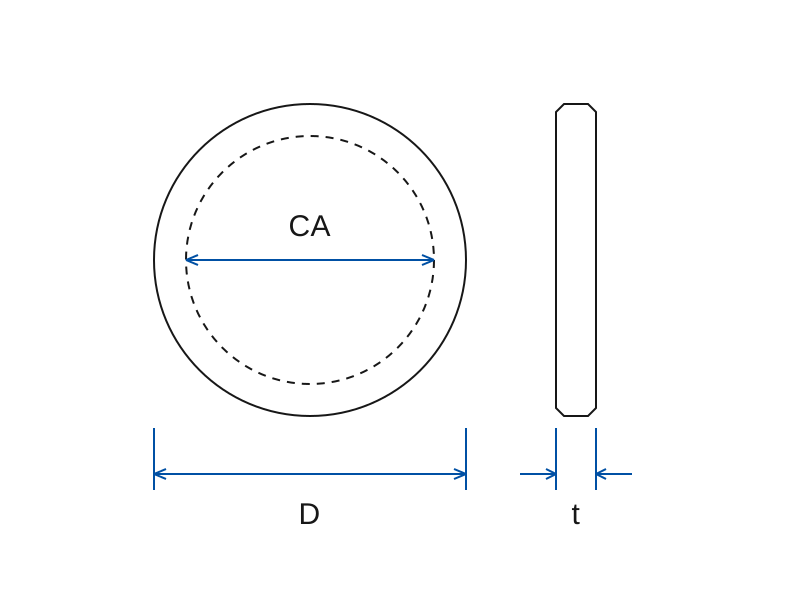
| PropertyClear aperture and edges | SpecificationDefine the optical area, edge exclusion and chamfer on the drawing |
| PropertyTransmission | SpecificationSpecify wavelength, thickness, surface/coating condition and total or internal transmittance |
| PropertyCoating options | SpecificationUncoated, or a coating reviewed for the wavelength and angle of incidence |
| PropertyMaterial quality | SpecificationBubbles, striae, homogeneity and fluorescence requirements agreed for the application |
Outer size, clear aperture and thickness describe different requirements. Mark each one on the drawing.
Use the working wavelength first, then review the signal, environment and next process.
JGS2 is a candidate when its measured transmission meets the optical requirement. Compare data for the specified thickness, polished surfaces and coating state.
For deeper UV, review JGS1. For fluorescence-sensitive measurements, specify the excitation wavelength and acceptable background; do not infer performance from the grade name.
Explore JGS1 fused silicaOH-related absorption can affect infrared transmission. Low thermal expansion does not by itself establish a finished-part temperature rating: geometry, coating, mounting and thermal gradients also matter.
Start from the instrument or process below, then use its optical and mounting requirements to define the substrate.
Material, dimensions, surface, pattern, coating and documentation can be reviewed together when the standard configuration is not enough.
Specify JGS2 grade, diameter or outline, thickness, clear aperture and chamfer.
Define polished faces, flatness, parallelism, surface quality and transmission at the working wavelength.
Discuss coating or photolithographic patterning, handling, protective packaging and the required inspection records.
Short answers to the questions that affect material choice, pattern definition and acceptance.
Both are silica glasses, but JGS2 is commonly made from natural quartz, while synthetic fused silica is produced from chemical precursors. Purity, absorption and fluorescence depend on grade and supply. Specify the actual material rather than treating the names as interchangeable.
No. It is a commonly cited selection range. Transmission varies with wavelength, thickness, material grade and surface condition. Agree the required value at the actual operating wavelength instead of assuming uniform transmission across the range.
Consider synthetic JGS1 when deeper-UV transmission is required. For fluorescence-sensitive detection or laser use, compare the actual material data and test conditions; neither grade name alone proves suitability.
Yes. Send the drawing or preliminary dimensions, clear aperture and optical requirements. The achievable combination of size, thickness and tolerances is reviewed for the part.
These processes can be reviewed as part of the project. State the wavelength, coating area or pattern file, orientation and inspection requirements. The base substrate is unpatterned unless a patterned configuration is specified.
Confirm these items after the product type and core parameters are selected. They define how the finished component is manufactured, checked and documented.
Agree the material identification, dimensional checks and optical inspection plan before production. Wavelength-specific transmission results should identify thickness and surface condition. Material certificates and additional measurements are confirmed in the quotation; the grade name alone does not establish a pressure, temperature or laser-damage rating.
Send the drawing, reference artwork or preliminary specification for manufacturing and inspection review.
Discuss this product